
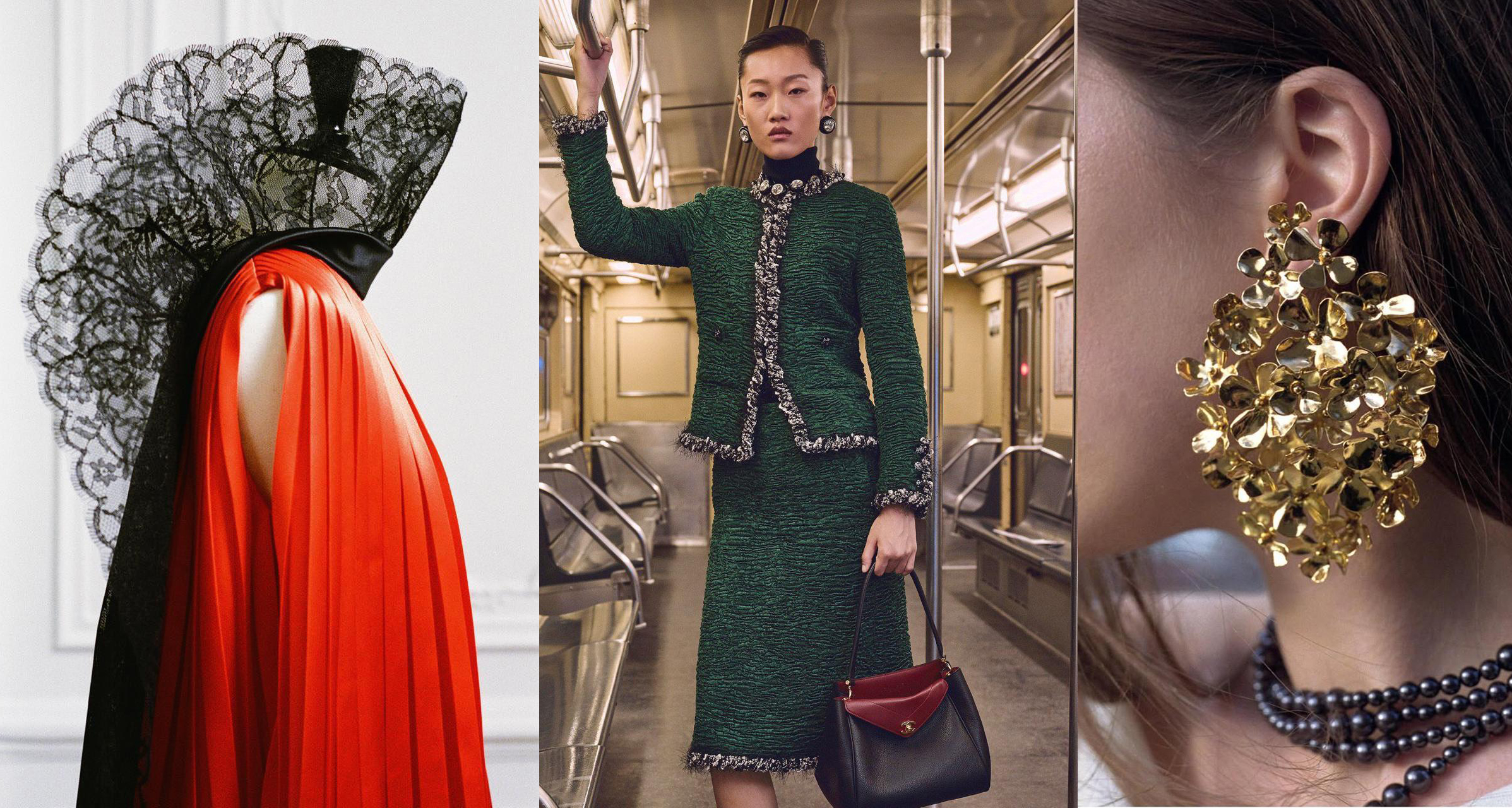
Alex Chevalkov, New look of “New look – Dior and Chanel’s new seasons, 2025. (Courtesy: Alex Chevalkov).
The dizzying carousel of fashion events in 2025 proved a serious stress test—not only for consumers of super‑brands, but for the brands themselves. A flamboyant bouquet of disappointments, bewilderment, sudden enthusiasms, and loud revelations was unceremoniously tossed at the feet of the Creative Directors’ Club of the world’s top twenty fashion Houses.
Amid growing panic—declining sales, collapsing interest, and a chronic shortage of meaningful innovation—the “good boys” and “bad boys” of fashion who had shaped its image over the past three to five years, together with their employers, launched a grand marketing experiment we might call Switcheroo 25: the Great Rotation of Big Names within Big Brands. The experiment was concluded just in time for the Fall Fashion Week.
Thus, in 2025, creative directors and teams changed at Dior, Chanel, Balenciaga, Valentino, Maison Margiela, Gucci, Jean Paul Gaultier, Versace, Givenchy, Mugler, Jil Sander, Fendi… Enough? Not quite. Add Bottega Veneta, Tom Ford, Celine, Lanvin, Loewe, Marni, Moschino, and Proenza Schouler.
So what was it? A fashion revolution—or an elegant imitation of frenetic activity? The masks fell quickly, without outside assistance. Now that all the “super‑debuts” are behind us, one can say honestly: the miracle did not happen—again. The winners remain the same, but the number of losers turned out to be far greater than anticipated.
Importantly, not a single one of the Houses involved dared to invite even one truly new face into the top tier.
Throughout the first half of 2025, the fashion world kept its audience in suspense: who would occupy the two key thrones—Dior and Chanel? It had become clear that the confident yet entirely risk‑averse women’s fashion of Maria Grazia Chiuri (ex‑Dior) and Virginie Viard (ex‑Chanel) was no longer delivering strong business results. A new generation of luxury consumers is setting its own rules—and not all brand owners know how to read these signals. At the same time, fear of losing the “old” clientele continues to paralyze decision‑making.
Dior and Chanel once again emerged as clear winners. Collections by fashion’s “good boys”—Jonathan Anderson for Christian Dior and Matthieu Blazy for Chanel—demonstrated how relevance can extend tradition without breaking it. For the first time in a while, there was a sense that the new season offered more than merely updating a fragrance or a handbag: it became possible to buy something genuinely fashionable in clothing.
It is worth noting that Anderson came to Dior from Loewe, while Blazy arrived from Bottega Veneta and the anonymous team at Maison Margiela—brands that have made a notable aesthetic leap in recent seasons.
The Great Rotation proved far less kind to fashion’s “bad boys”: Demna Gvasalia (ex‑Balenciaga), Alessandro Michele (ex‑Gucci), and the newly added Pierpaolo Piccioli (ex‑Valentino).
Balenciaga—turned by Demna into a cult brand for twenty‑somethings—suddenly realized that selling something other than sneakers is, in fact, necessary. Praise be to the celestial guardians of elegance: the spirit of Cristóbal Balenciaga sent Demna off to Gucci.
Gucci, in turn, had a year earlier unleashed another troublemaker—the apocalyptic dandy Alessandro Michele—to do his damage at Valentino. Which one of Valentino’s owners, the custodians of Italian classical elegance, decided that Michele was the right person for the task remains a mystery. Finally, Pierpaolo Piccioli, exiled from the fashion house after twenty‑five years of service, was invited to revive Balenciaga.
Curtain.
The circle—or rather, the triangle—is closed.
And what has changed? At the very least, minus Balenciaga, minus Valentino: Balenciaga’s new collection left virtually no memorable images behind, and Valentino’s search for a “new elegance” remains as foggy as ever.
It appears that some brands, swept up in collective hysteria—often a symptom of falling sales and waning interest—never fully understood what, exactly, they were renewing, how, or why. Versace clearly faces difficult times ahead; Jean Paul Gaultier’s new collection provided fertile ground for irony but lacked the maestro’s former sparkling wit. There is still hope that the new Gucci—still in the process of revealing itself—will be able to round out the top three fashion leaders next season.
As it turned out, almost none of the fashion critics’ predictions regarding the redistribution of creative-director seats came true. The industry still knows how to sustain intrigue—we’ll give it that. John Galliano was confidently predicted a triumphant return to one of the Houses, yet in the end, he received nothing—his own brand even vanished from view. At least Maria Grazia Chiuri, after so many years at Dior, received an invitation from the Fendi sisters—one of the few women helping to dilute this overwhelmingly male club.
Set against flat socio-political narratives that had worn audiences thin with collective fatigue, fashion in 2025 displayed remarkable activity. The flood of change swept away many myths behind which designers had hidden for decades. Old tricks no longer work: neither endless archive reinterpretations nor “radical minimalism,” the eternal fallback for those lacking both ideas and budget.
“To create something new” or “to carefully avoid damaging tradition”—this was the central question of 2025. The answers varied. The industry still pretends that innovation is possible within the old system. But audiences are just as tired of “eternal heritage” as of astronomical luxury price tags.
This year made one thing clear: a new aesthetic is impossible without new people. Rotating chairs and revolutionizing press releases will not work until new, as‑yet‑unknown street‑level geniuses enter the game. If fashion continues to pretend it is changing in 2026, it should at least replace the screenwriters. Better yet—the actors.
For now, one can still manage to pick up a small, very expensive gift from one of the new‑old superstars of the fashion firmament. Here’s to hoping that 2026 brings us new discoveries—and new revelations!


0 Comments