
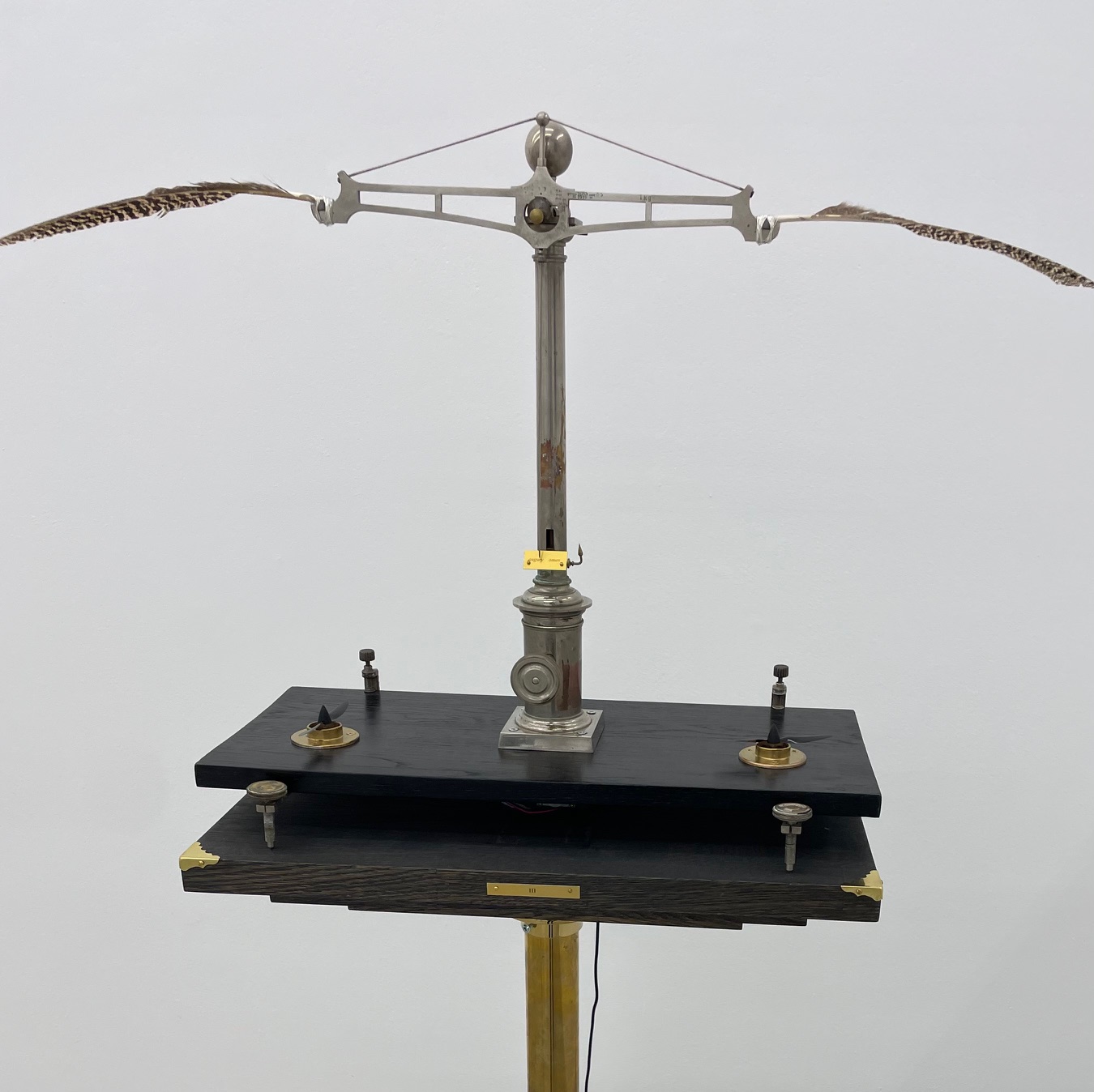
Jyrki Parantainen, III, 2012. From the series Heaven and Earth. Copper, brass, feather, oak, electronics. (Photo: Vladimir Dudchenko)
In order to navigate the high seas, one starts inventing totally artificial constellations out of non-connected stars. The same is true of any gallery scene as immense as Berlin’s, else any reference becomes a welter of names and locations.
This Autumn, such constellations here would be— un-photographic photography; contemporary painting, quote-unquote; and classics revisited.
Conceptual photography
One of the main tasks of photography, after it has established itself as a regular at ‘normal’ contemporary art galleries, is pushing the medium’s boundaries.
Eric Meier (b. 1989) and Andrea Pichl (b. 1964) at Mountains: both come from East Germany, though Meier was born around the time the Wall came down; therefore, he never really experienced it. He is long since in the gallery’s roster, while it’s the first show here for Pichl, who has been propelled to wider recognition (or stardom) with last year’s solo exhibition at the Hamburger Bahnhof museum. Both are exploring the social fabric with various tools, turning to photography often.
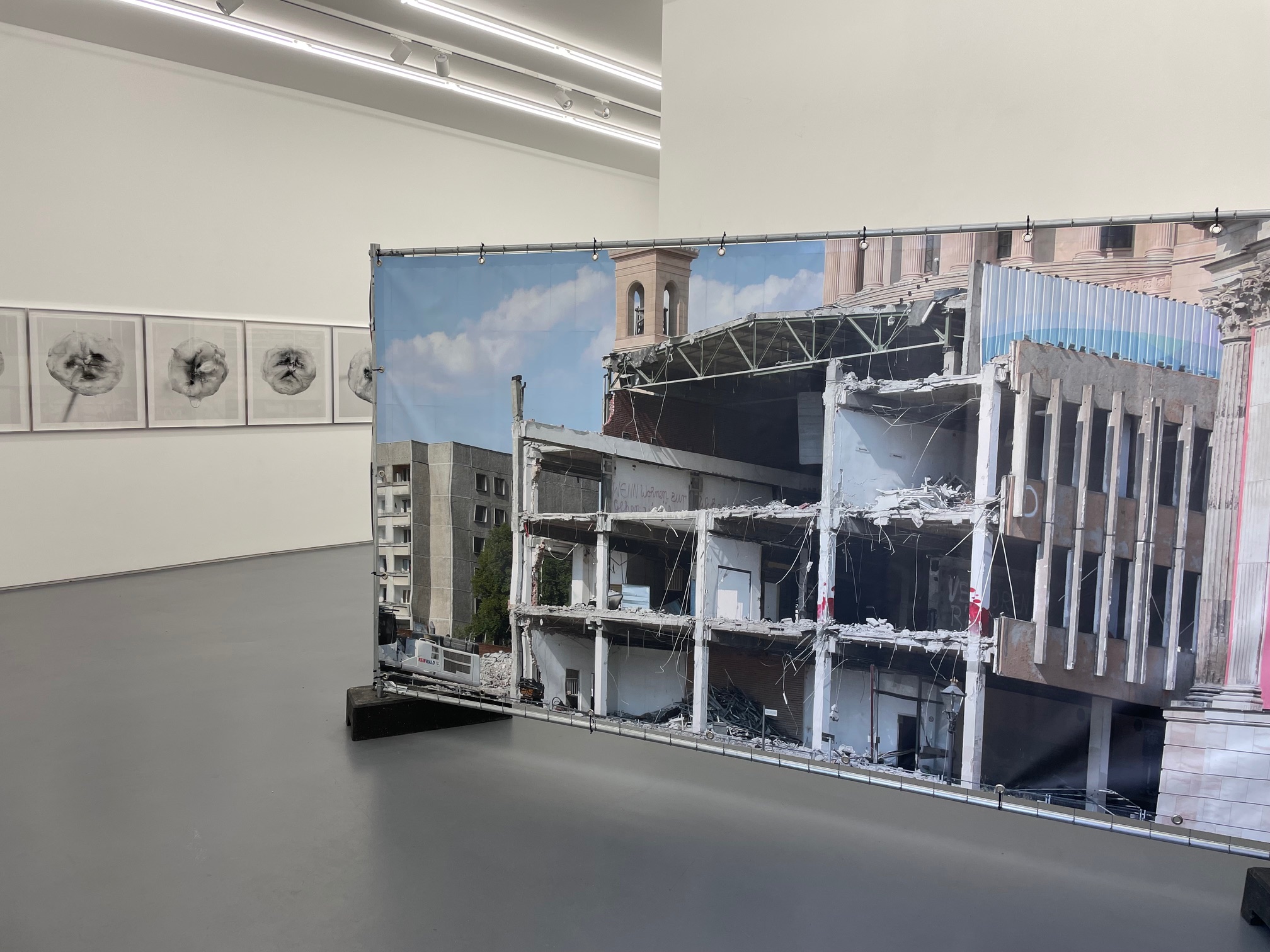
Andrea Pichl & Eric Meier, Mountains Gallery; Installation view. (Photo: Vladimir Dudchenko).
Meier shows a series of ‘flowers’ that are actually bananas cut in half. This is a play with the idiom ‘banana face’, which denotes an Ossie (East German person). Pichl’s series ‘Whose tomorrow is tomorrow? Whose world is the world?’ (2023) is an installation of large-format images printed on tarpaulin, mounted on construction fences, and depicting late-modernist buildings of the GDR in different stages of decomposition or renovation. Together, this serves as a reflection on the future that has emerged following the country’s unification.
Secular Limbo by Jyrki Parantainen at Persons Projects: Firstly, the gallery is home to the Helsinki School, which term denotes a set of artists who had studied photography under Timothy Persons in the 1990s in what is now Aalto University School of Arts, Design and Architecture. Secondly, Parantainen (b. 1962) is a prominent member of the said school and already a professor himself. Thirdly, Timothy Persons is the same person who started the gallery and runs it.
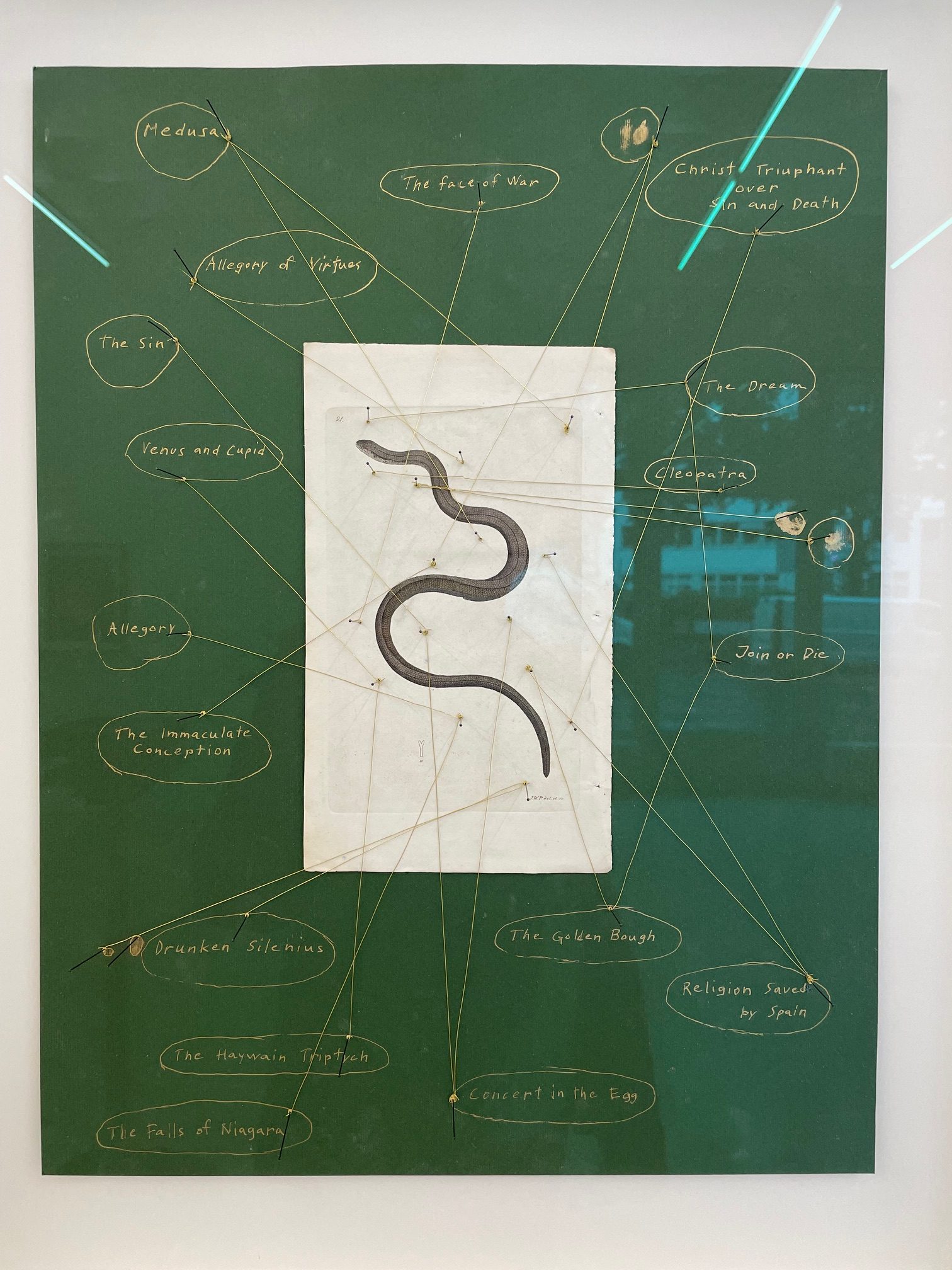
Jyrki Parantainen, The Magic Circle, 2025. From the series Poetry of Circulation. Insect pins, brass wire. (Photo: Vladimir Dudchenko)
This new show consists of works spanning over a decade. Typical materials involved are prints, insect pins, brass wire, and hand drawing for newer works like ‘Mehr Licht’, 2025, or gold leaf, plastic, steel, oak, brass, feather, and glass for older sculptures like ‘Golden Dew of Sleep’, 2011. Put together: baroque clockwork, curiosity cabinet, northern University air – and an emotional vision of art and culture that is based on associations as much as research.
‘The world and the mirror’ by Timm Rautert at Galerie Nordenhake. The art that’s upstairs is from Timothy Persons. The gallery surprises us, as it doesn’t specialize in photography. In the course of his career, Rautert (b. 1941) had explored conceptual photography (since the late 60s) as well as worked in the news. This latest show is mostly built around his series ‘Space’ (2014/2015) and ‘Manhattan Mirror’ (2012). The first one consists of ‘portraits’ of different meeting rooms in the UN’s Food and Agriculture Organization in Rome, situated in a building that had been started before WWII and finished after. Each room is decorated in a distinct ‘national’ style: e.g., ‘The German Room’ somewhat in the vein of Mies van der Rohe, etc. It makes the whole concept colonial and outdated – and at the same time, gives a reference to the Venice biennial with its Giardini national pavilions.
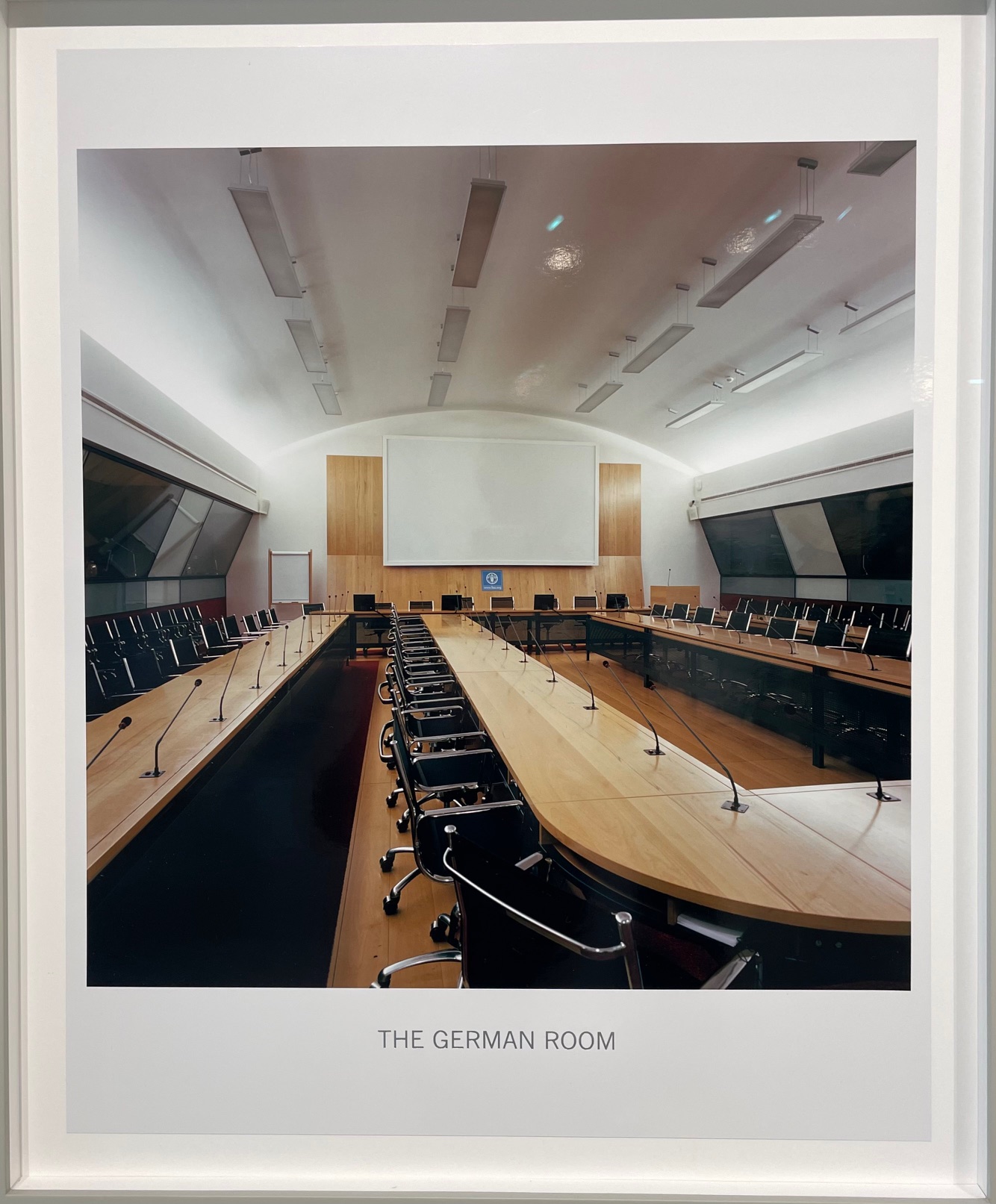
Timm Rautert, Food and Agriculture Organization of the United Nations, 2014/2015 (detail). From the series Weltraum. 15 photographs (Photo: Vladimir Dudchenko).
The second series plays with architecture that is designed to mirror life. Here, people appear as reflections. It is continued with the installation ‘Four mirrors and a stone’ (2024), which can be seen as architecture boiled down to primary elements.
All three shows run until October 25.
“Contemporary Painting”
Such a loose term only calls for quote marks. In general, the medium’s rise in popularity among young-to-mid-career artists is very visible. These works are always heavily contextualized, of course; but if some five years ago yours truly used to ask artists as a pun ‘what is your abstraction about’, now the question is: ‘what is your intentionally awful figurative painting about’.
There are better and worse variations, of course, we’ll focus on the former.
The German-Iranian Bettina Pousttchi (b. 1971) has been exhibiting with Buchman Galerie for the last decade. Her ‘Vertical Highways’ sculptures made from painted guard rails drew attention during the Venice Biennale in 2009 and can now be found around the world: striking, highly instagrammable, and somewhat illusionary fuzzy. The show commemorates a 6-meter-high installation, lately installed in front of Istanbul Modern, but its smaller siblings suddenly lose appeal inside a gallery space. The main attraction of the show is ‘Horizons’, photography-inspired abstract paintings (acrylic on linen), along with ‘Earthwork’ (objects, glazed ceramic). Well, sometimes scale matters. Indoors, tamed pieces stop being space-bending puncta and become commercially decorative. Until October 25.
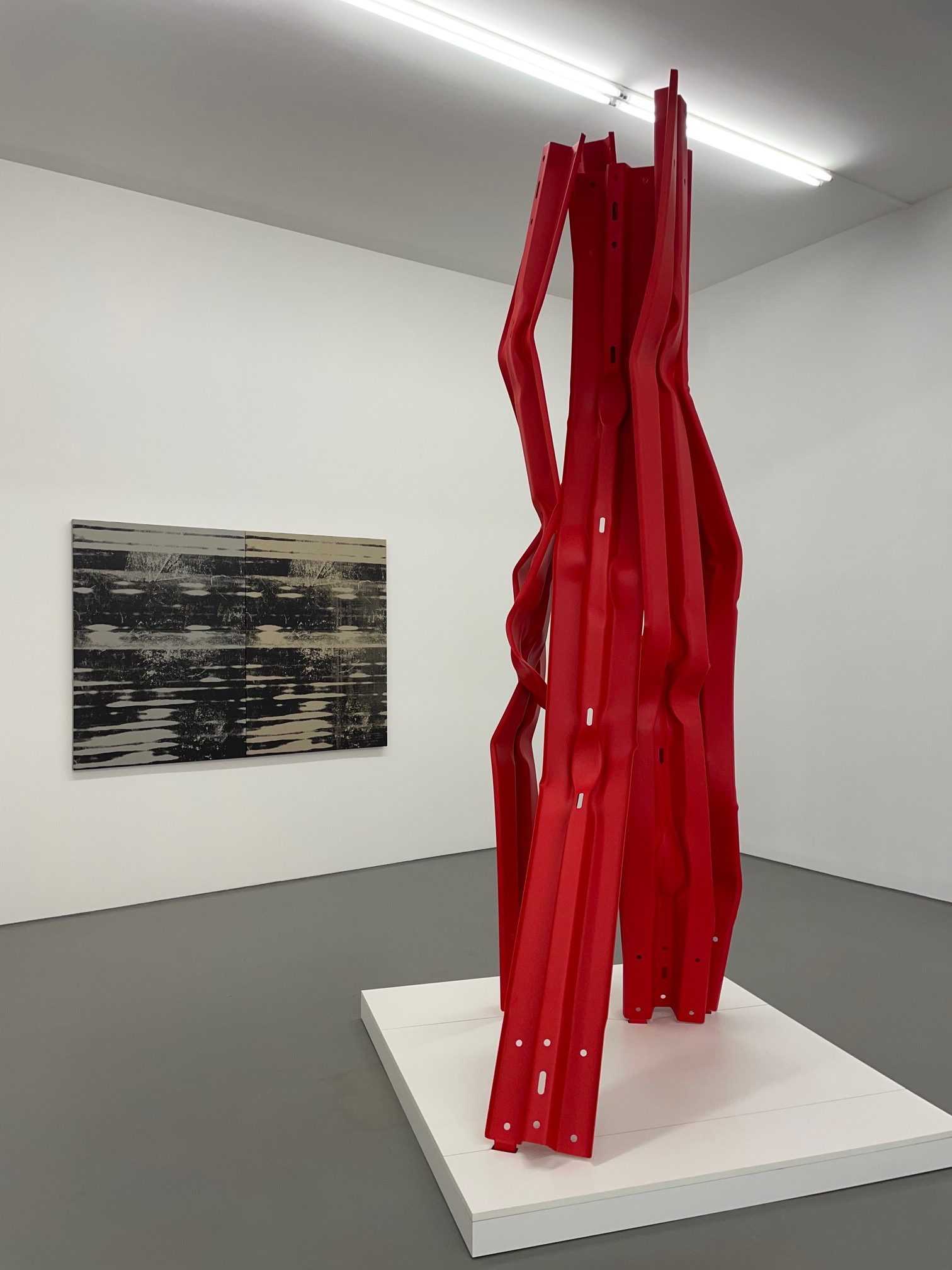
Bettina Pousttchi, Buchman Galerie; Installation view. (Photo: Vladimir Dudchenko).
Abstraction of some scale that works fine inside a white cube can be seen at carlier | gebauer. New works by the Philippines’ Maria Taniguchi (b. 1981) from the series Untitled are up to 3 meters high and represent meticulously painted brick walls, reminding of Roman Opalka.
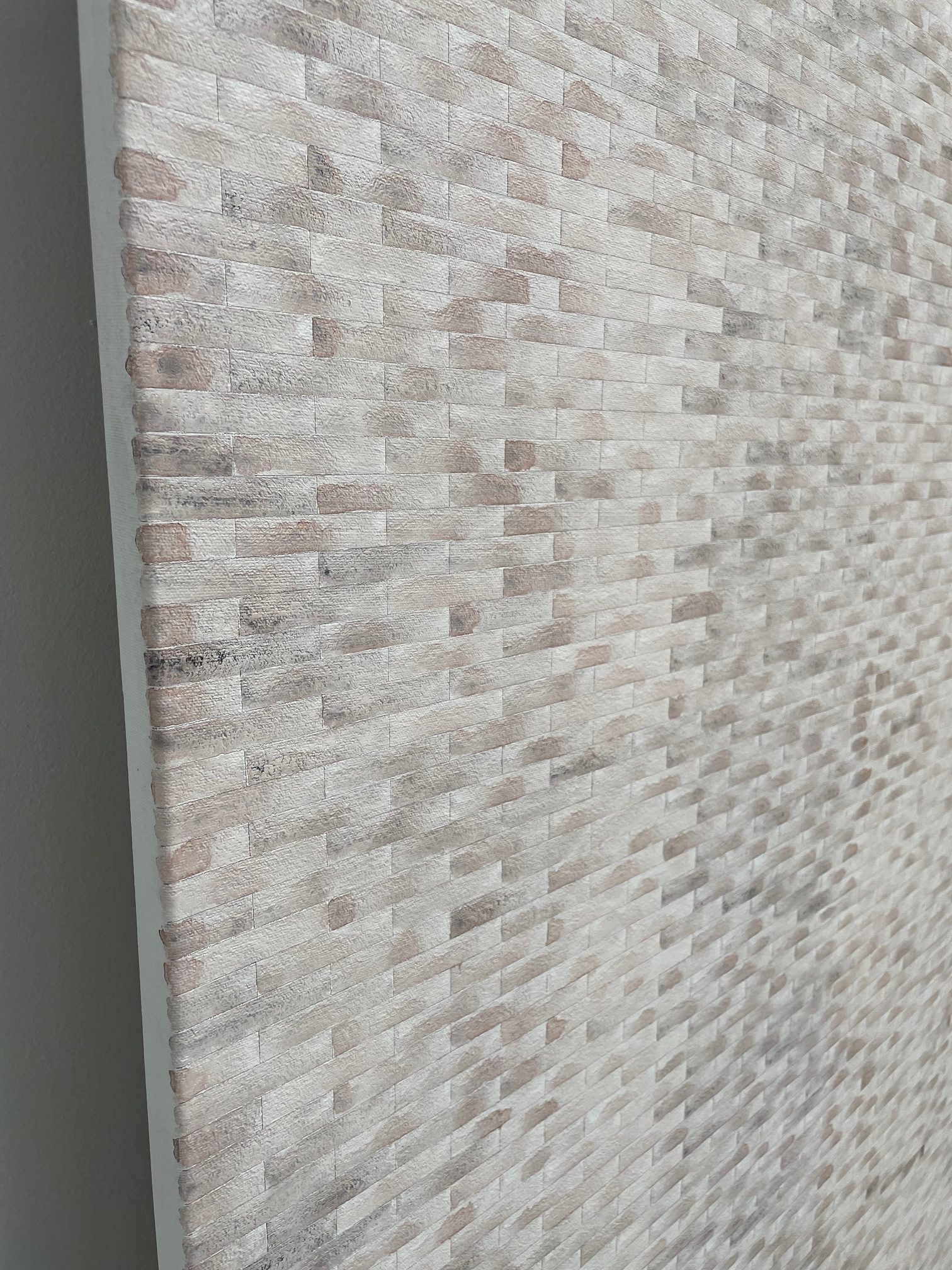
Maria Taniguchi, Untitled, 2025 (detail). Acrylic and pencil on canvas (Photo: Vladimir Dudchenko).
This exhibition takes up only one room of the gallery’s large space, with the others showing the group exhibition ‘Fluid Systems’. Susanne Treister, with her early virtuality-questioning work Software/Q (1993) and one of the Tarot series HEXEN 2.0 / Tarot major arcana (2009-2011), is not to be overlooked.
Until October 22.

Susanne Treister, Tarot series HEXEN 2.0 / Tarot major arcana, 2009-2011 (detail). Archival prints hand-printed with watercolour on Hahnemühle bamboo paper, 22 parts (Photo: Vladimir Dudchenko).
Thomas Zipp (b. 1966, ex-punk rocker, now professor) at Galerie Barbara Thumm offers an appealing Lynch-esque scary everyday complete with signposts and a motorbike installation. Until October 25.
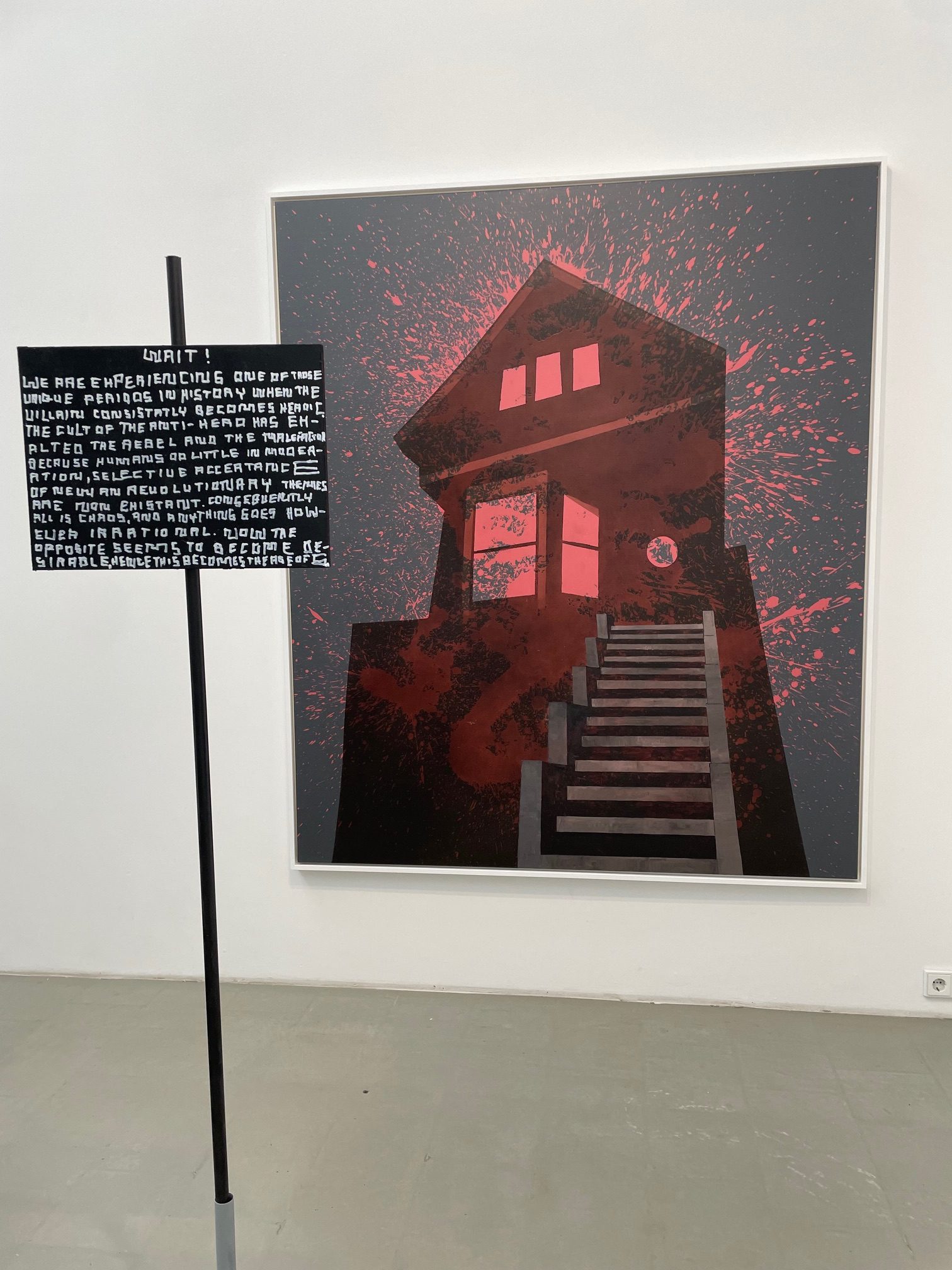
Thomas Zipp, Galerie Barbara Thumm; Installation view. (Photo: Vladimir Dudchenko).
‘spray light layer emerge’ by Adam Pendelton (b. 1984) at Pace is an expensive show of a branded artist. Title says it all. Dark abstractions, decorative, clever, essentially boring. Until November 2.
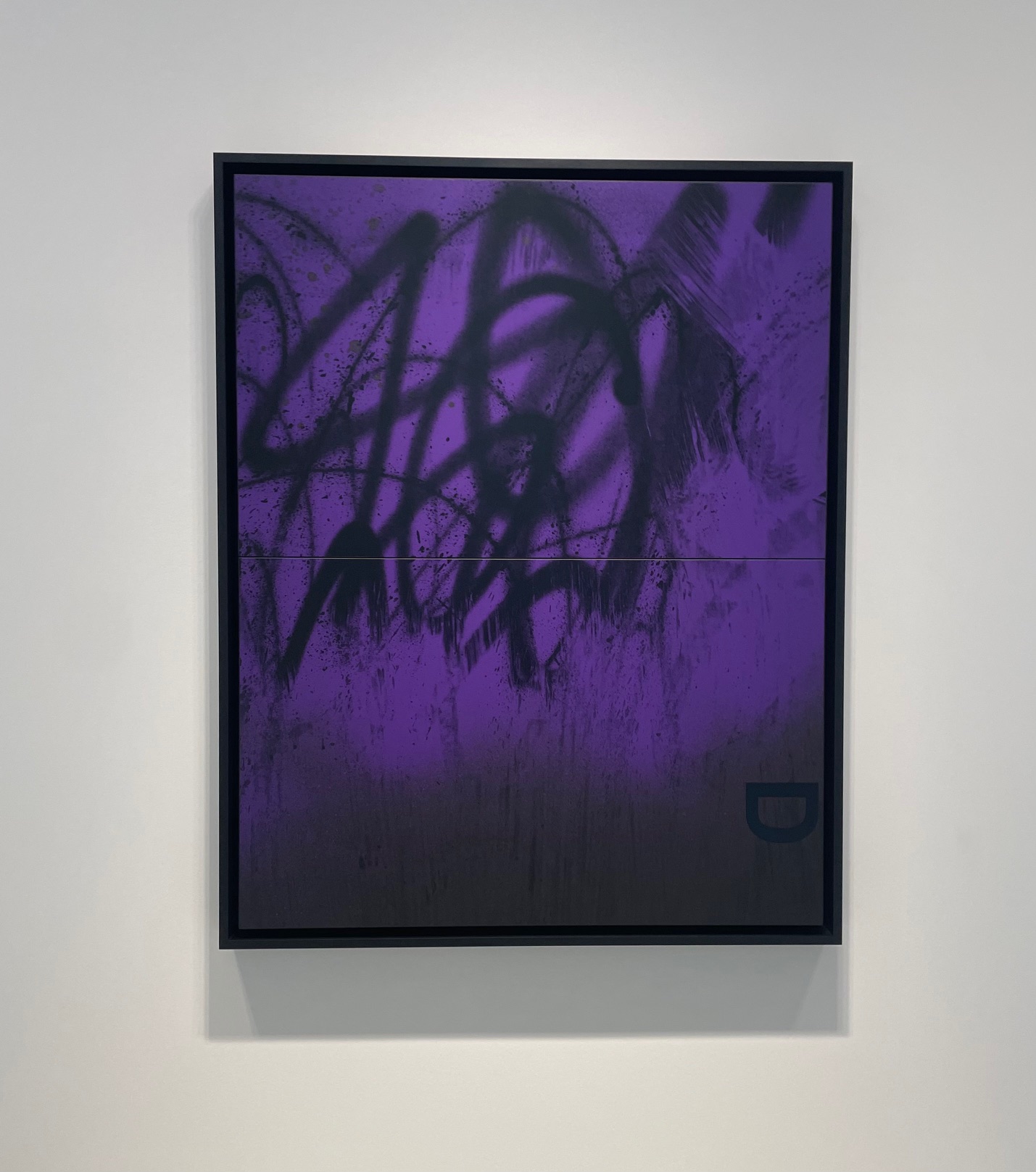
Adam Pendelton, Black Dada Drawing (D), 2023. Silkscreen ink on paper in the artist’s frame (Photo: Vladimir Dudchenko).
‘Thinking Through (13 Years)’ by Pieter Schoolwerth (b. 1970) at Kraupa-Tuskany Zeidler is the artist’s reflection upon 13 years of his images being represented at KTZ’s website. It features some painted 3D-abstractions, along with a scale model of the gallery exhibition in a separate room, complete with scale model paintings. ‘I will call him Mini-me.’ Until October 25.
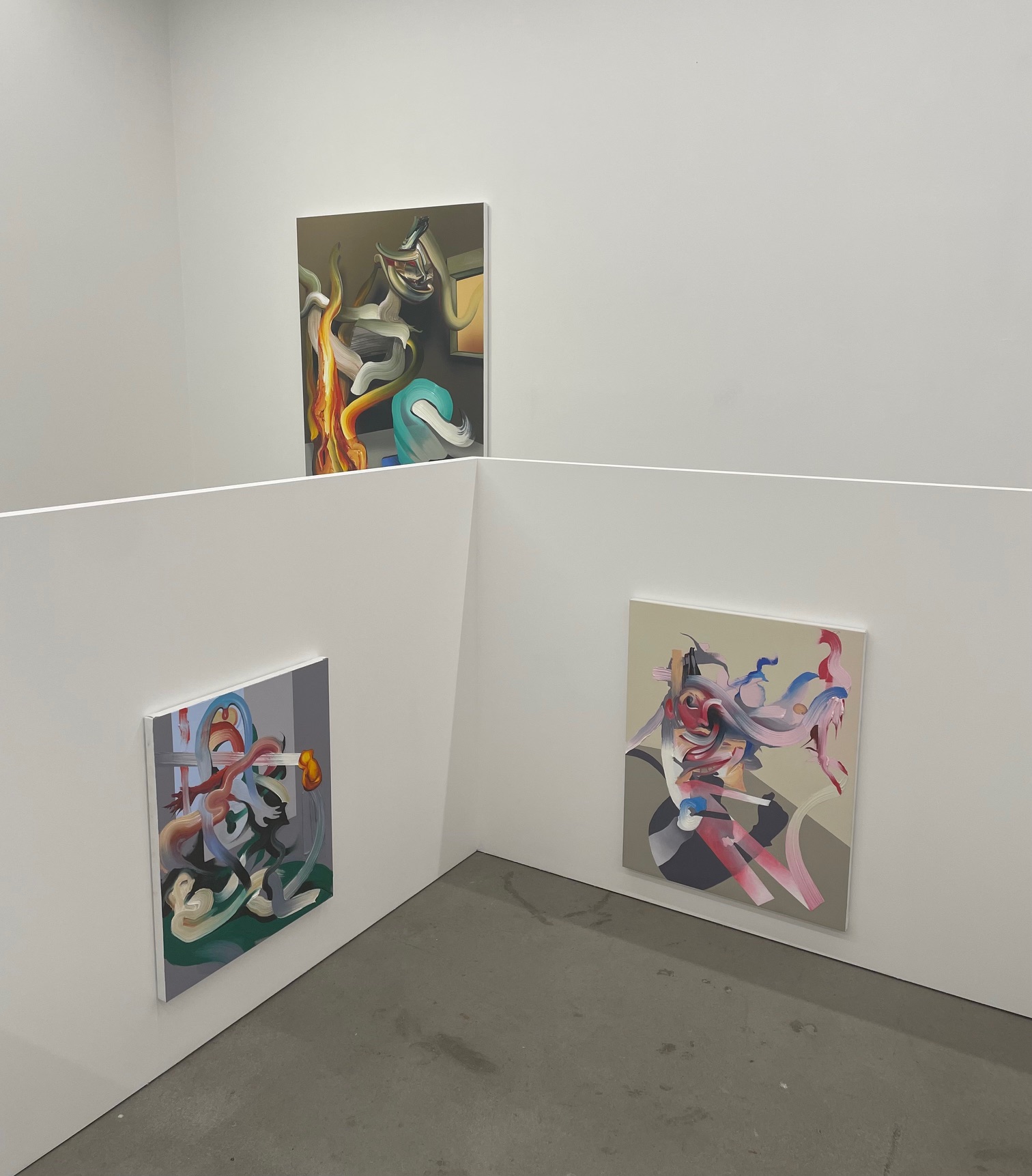
Pieter School, Kraupa-Tuskany Zeidler Gallery; Installation view (model, detail). (Photo: Vladimir Dudchenko).
Classics revisited
There is normally a selection of established names on show – a lot depends on your vision of a classic, though. Currently, the number one artist would be Bruce Nauman, whom we have already covered in the previous report.
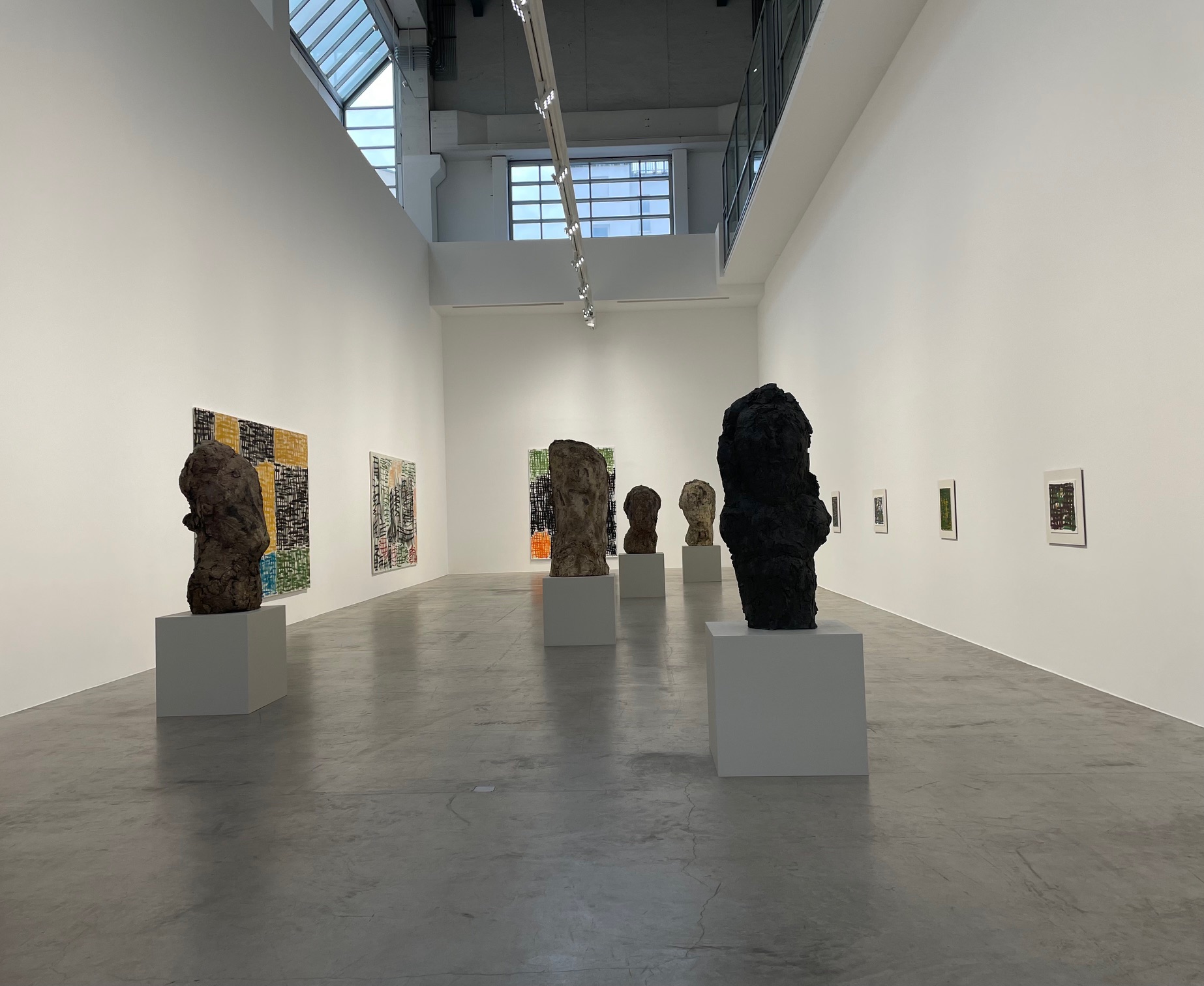
Hans Josephson and Günther Förg, Max Hetzler Gallery; Installation view. (Photo: Vladimir Dudchenko).
‘A Dialogue’ by the late Hans Josephson (sculptor, 1920-2012) and Günther Förg (painter, 1952-2013) at Max Hetzler is something very heavy in every sense. The two were friends, per the press release, despite the generation difference. Just barely figurative sculptures and large paintings in the lower level are indeed in (expensive) dialogue; only the grille structures by Förg surprisingly appear somewhat superfluous in this size. Luckily, there are also some smallish acrylic works on wooden panels, which appear so much more complex. And simplistic drawings on concrete on the second floor. Until October 25.
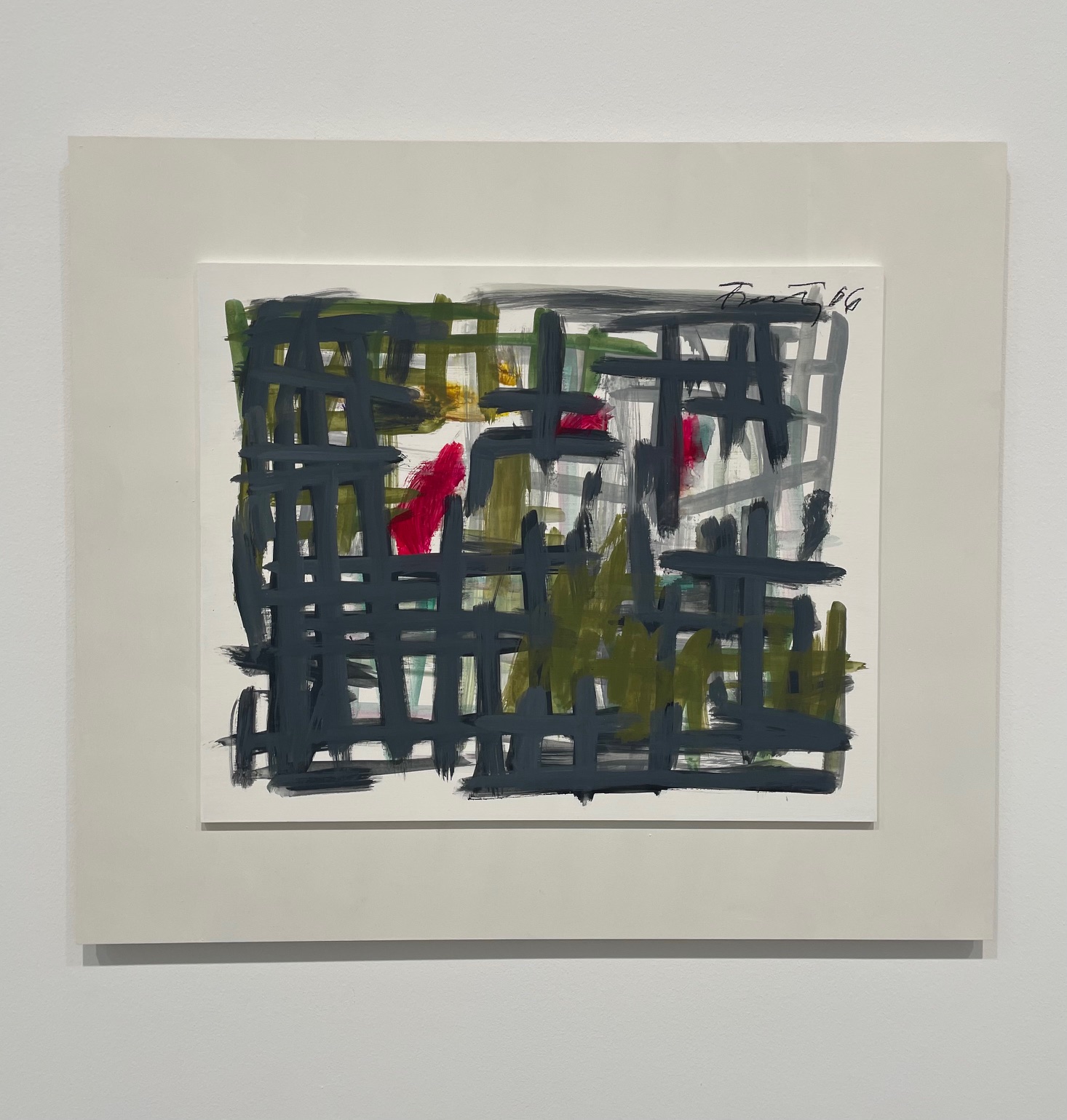
Günther Förg, Untitled, 2006. Acrylic on wood mounted on white-painted wooden panel (Photo: Vladimir Dudchenko).
Charlotte Posenenske (1930-1985) at Mehdi Chouakri in Wilhelm Hallen: the gallery is off-center and only opens to the public on Saturdays, 11 am – 6 pm, or by arrangement. The vernissage openings are busy, but on a normal exhibition day, you might well be there alone, save for the overseeing employee.
The gallery works with Posenenske’s archive in general. This time over, it’s already the second exhibition of her works on paper (mostly from around 1960) and ‘Rotating wings, series E’ (1967-1968). The latter is a set of metal objects, consisting of frames and square parts that can be moved into various mobile sculptures.
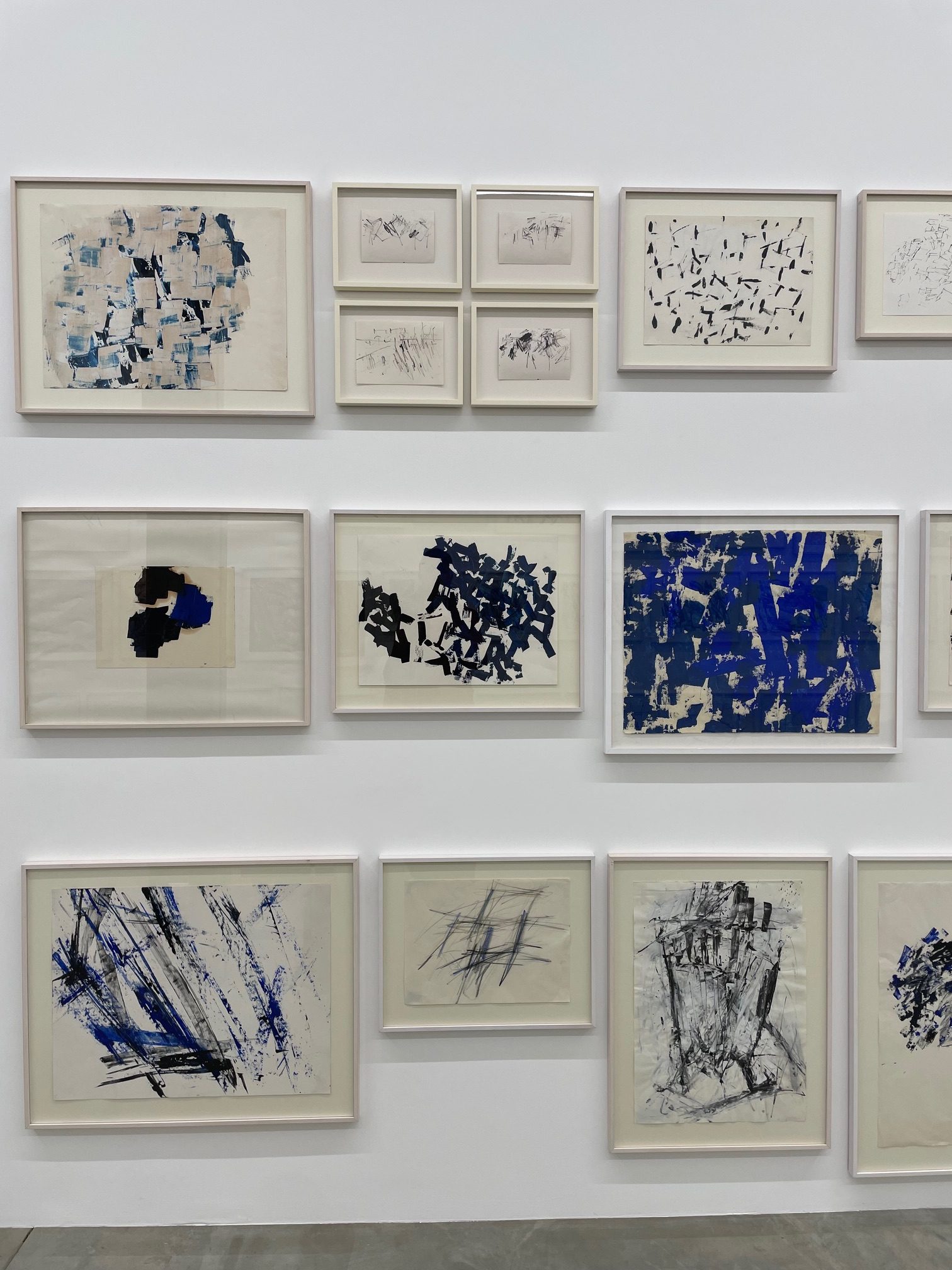
Charlotte Posenenske, drawings; Installation view. (Photo: Vladimir Dudchenko).
Posenenske was introduced to American minimalism in 1965 and started producing her own radical sculptures, often made from parts of ventilation duct sections and not always recognizable as works of art at first glance. She stopped making art in 1968. The works on show currently were her last project. After that, she became a sociologist and a community worker, declaring that art won’t bring social change. Being part Jewish, she had survived by hiding underground in Germany during the Nazi times; that must have left a lasting imprint.
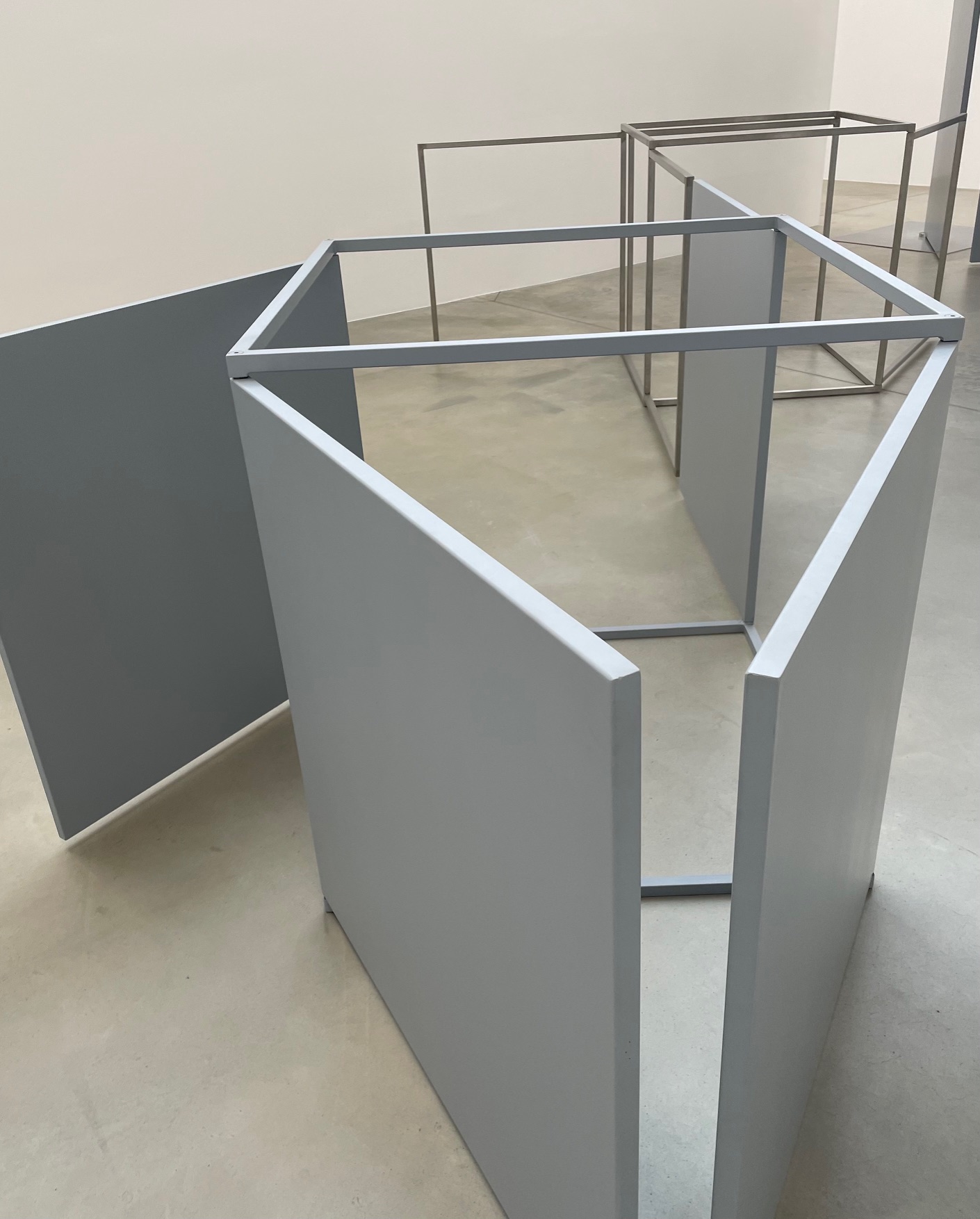
Charlotte Posenenske, Die Serie E: Installation view. (Photo: Vladimir Dudchenko).
She only made objects for three years, only to be largely forgotten and rediscovered in the mid-2000s. Mehdi Chouakri did her solo show in the Spring of 2007, and she was selected for documenta 12 the same year. The rest is museum history.
Until November 1.


1 Comments
read more
This is my first time visit at here and i am in fact impressed to read all at single place.