
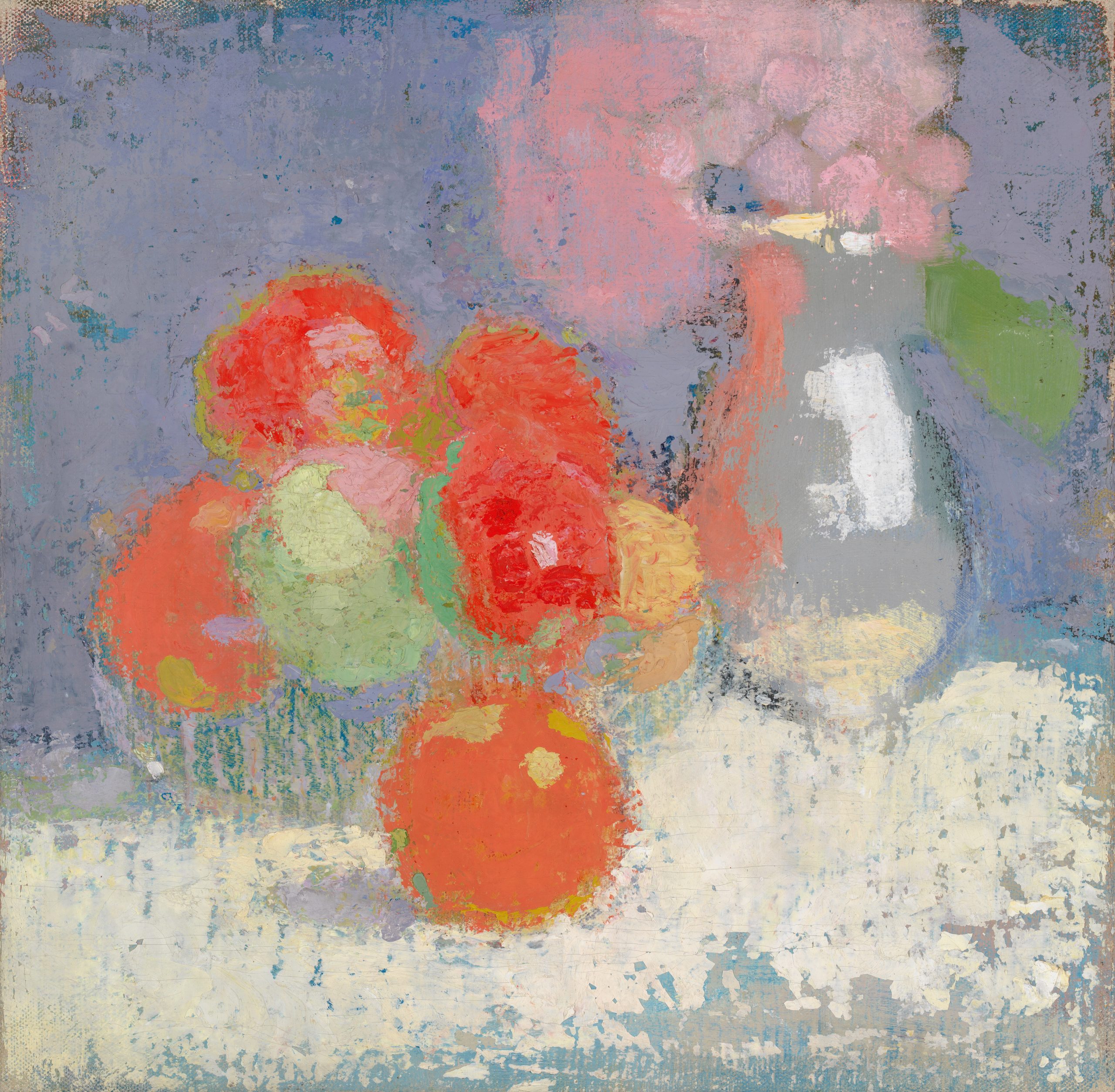
Helene Schjerfbeck, The Red Apples, 1915. Oil on canvas, 15 13/16 in~ 15 13/16 in. (40.2 cm~ 40.2 cm). Private collection, Vihti. (Photo: Finnish National Gallery / Hannu Aaltonen).
Seeing Silence is a fitting title for the upcoming exhibition devoted to Finnish painter Helene Schjerfbeck (1862–1946). An influential modernist who spent much of her life in semi-seclusion, Schjerfbeck developed a vocabulary of quietude: painting became the voice through which she spoke. Known for her experimentation with form and her strikingly expressive surfaces, she remains a pivotal influence on countless 20th-century artists. Although celebrated in Finland and Sweden as the most accomplished female painter of her time, she is still less familiar outside the Nordic region, especially in the United States. The Metropolitan Museum of Art’s exhibition will introduce her work to a U.S. audience for the first time on a major scale.
WHAT: Seeing Silence: The Paintings of Helene Schjerfbeck
WHEN: Through April 5, 2026
WHERE: The Metropolitan Museum of Art
Dita Amory, Robert Lehman Curator in Charge of the Robert Lehman Collection at The Met, reflects on how Schjerfbeck’s isolation shaped her contributions to modern art:
“Painting in remote Finland without recourse to broader culture and the exchange of contemporary ideas, Schjerfbeck created her own vernacular every day at her easel by sheer force of will. Seeing Silencelooks beyond art history’s cultural mainstream to one woman who overcame immense struggles to produce a powerful body of work, highlighting her rightful place in the story of modernism.”
Schjerfbeck herself echoed this sentiment in a 1916 letter, writing:
“Sometimes it is said that I am modern. I don’t know what modern looks like, I only know that the next work has developed from the previous one, through the experience that I have achieved.”
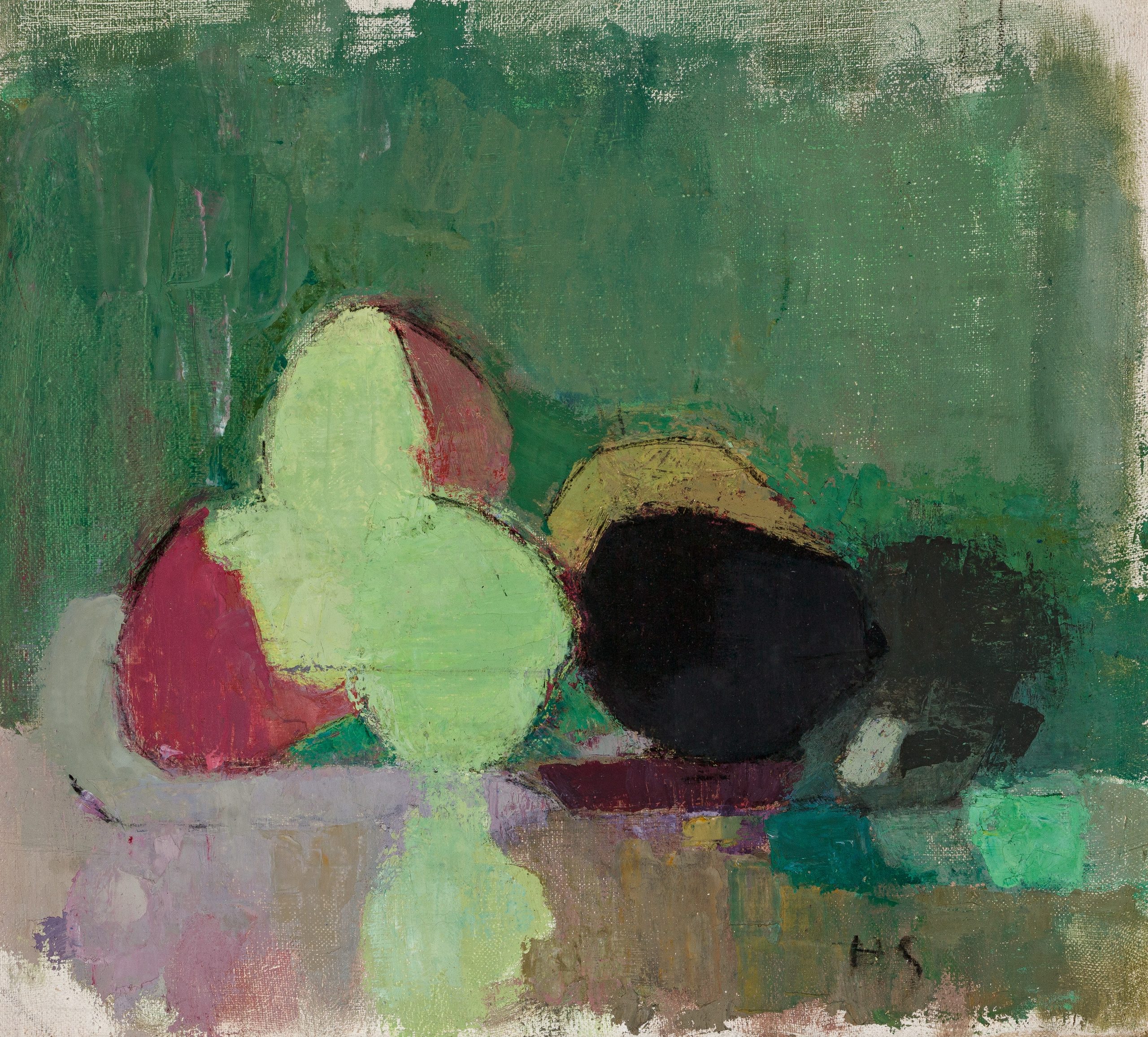
Helene Schjerfbeck, Still Life with Blackening Apples, 1944, Oil on canvas, 14 3/16 in~ 19 11/16 in. (36 cm~ 50 cm). Didrichsen Art Museum, Helsinki. (Photo: Rauno Tr.skelin / Didrichsen Art Museum).
Seeing Silence traces the arc of Schjerfbeck’s artistic evolution alongside the shifts in her personal life. Once a child prodigy of the Finnish Art Society, the artist slowly abandoned genre painting and delved into more flattened, expressive forms with muted color palettes. As she became increasingly reclusive, her canvases mirrored her environment: nearly monochrome surfaces, quiet tones, and a restricted visual language that pushed expressionism to its limit. The restraint was radical.
Despite her solitude, Schjerfbeck’s extensive self-portraits offer striking insight into her inner life. “My portrait will have a dead expression,” she wrote. “Thus, the painter reveals the soul, and I can’t help it. I’m searching for an expression, something gloomier, stronger.” Her 1907 self-portrait, simply titled Silence, marks the beginning of her retreat from public life and serves as a conceptual anchor for this exhibition. Across roughly forty self-portraits produced over subsequent decades, we witness a slow, unflinching record of aging and fragility. By 1945, one year before her death, she pictured herself with a gaunt, pale face—starkly aware of her own decline.
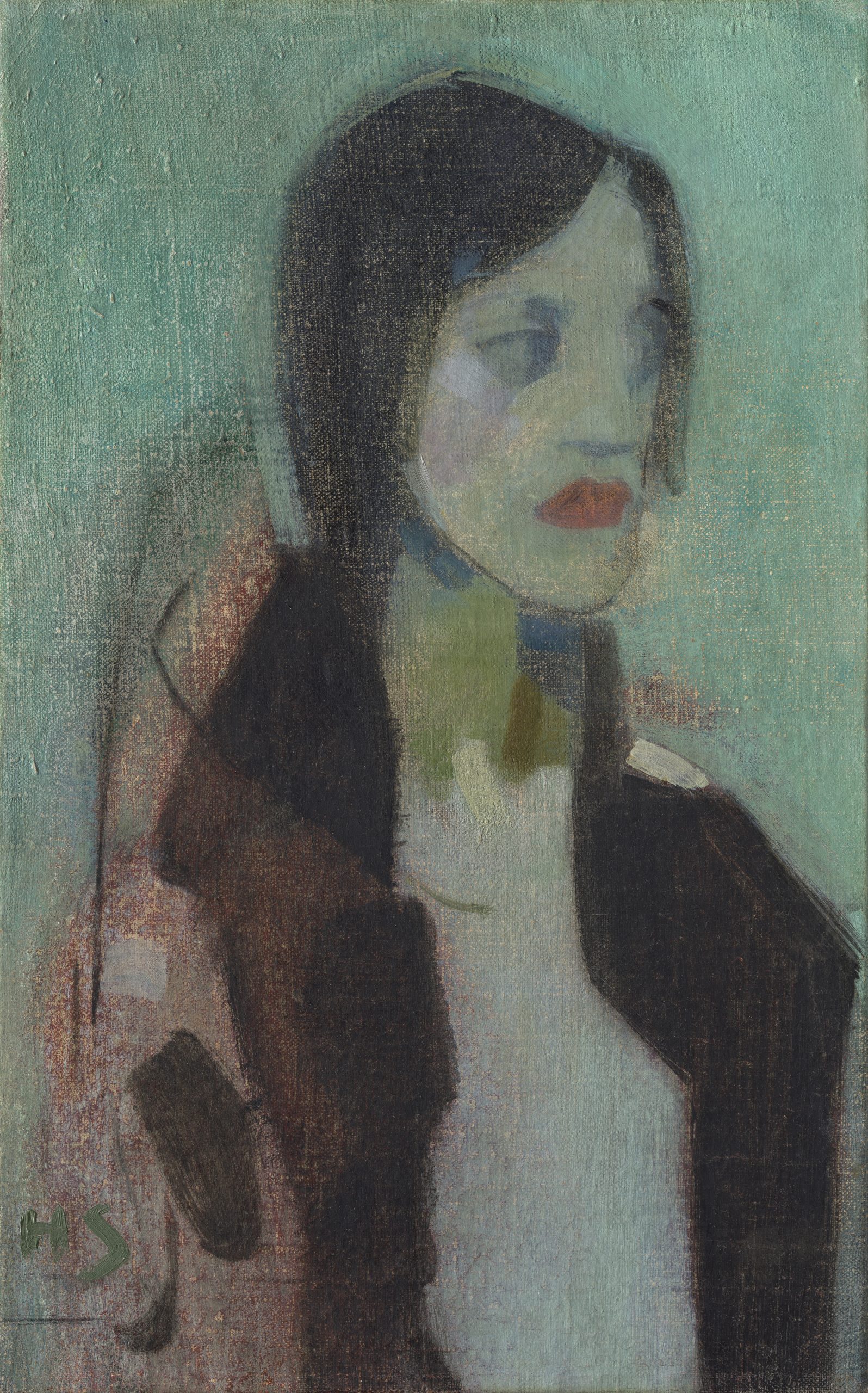
Helene Schjerfbeck, The Lace Shawl, 1920. Oil on canvas, 22 13/16 in~ 14 3/8 in. (58 cm~ 36.5 cm). The Metropolitan Museum of Art, Mary Trumbull Adams and Rogers Funds, 2023. (Photo: The Metropolitan Museum of Art).
In her later years, Schjerfbeck also revisited earlier works, effectively holding a dialogue between her younger and older selves. The Convalescent(1938) reimagines a painting she first produced in 1888. In the earlier version, a young girl seated in a wicker chair appears to be recovering strength; domestic objects around her suggest resilience and everyday hope. In the 1938 iteration, the same figure is frailer and twiglike, her gaze somber, the sense of recovery replaced by quiet resignation. Likewise, her still life Red Apples(1915) reappears in 1944 as Still Life with Blackening Apples, where the bruised fruit becomes a metaphor for her own deterioration. The apples darken as she does—aging, isolating, fading from public view.
Across the exhibition, a single question emerges: Can we see silence? Schjerfbeck’s paintings do not offer a definitive answer. Instead, they leave space for viewers to witness how quiet can deepen into intensity, how restraint can speak, and how an artist working far from the mainstream helped quietly reshape modernism.


0 Comments