
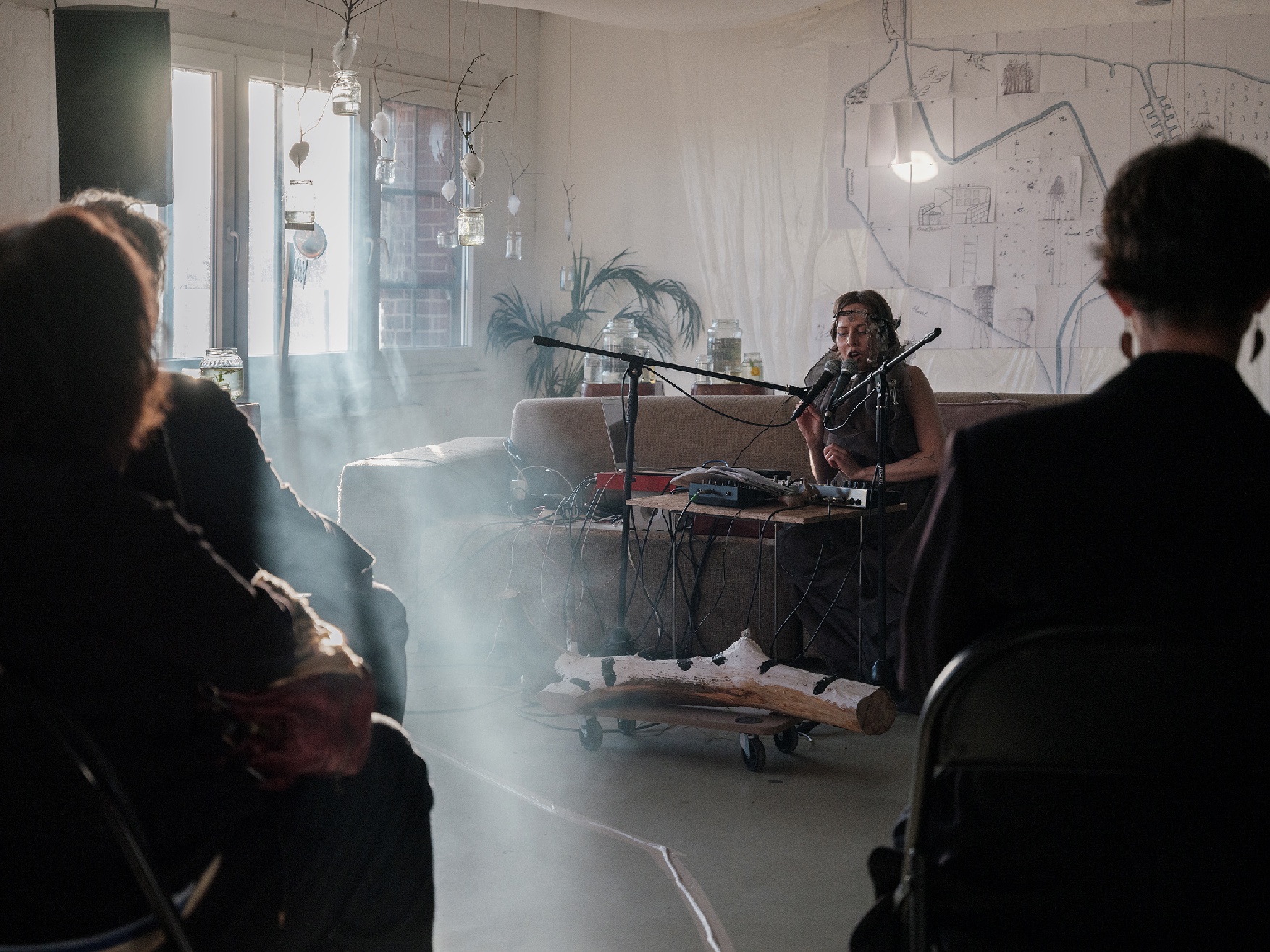
Varya Lisokot performing Eiswerder. Sofa Opera, 2026. (Photo: Max Sher).
The summer months in Berlin draw people to the local rivers, canals, and lakes. This June of 2026 is no exception, though somewhat bipolar, with sudden showers followed by the sun shining dramatically through the clouds.
Suddenly, a remote location on an island like Eiswerder becomes a blessing for those trying to escape the city. Yours truly has been writing repeatedly about artists located here in the Backsteinboot (‘Brick boat’) workshop cluster. A temporary home to some of the town’s innovative souls, it has sparked a community that is now reflecting on its own identity.
The place offers an artistic residency program, and it is here that the sound artist Varya Lisokot has lived and worked for the last four months.
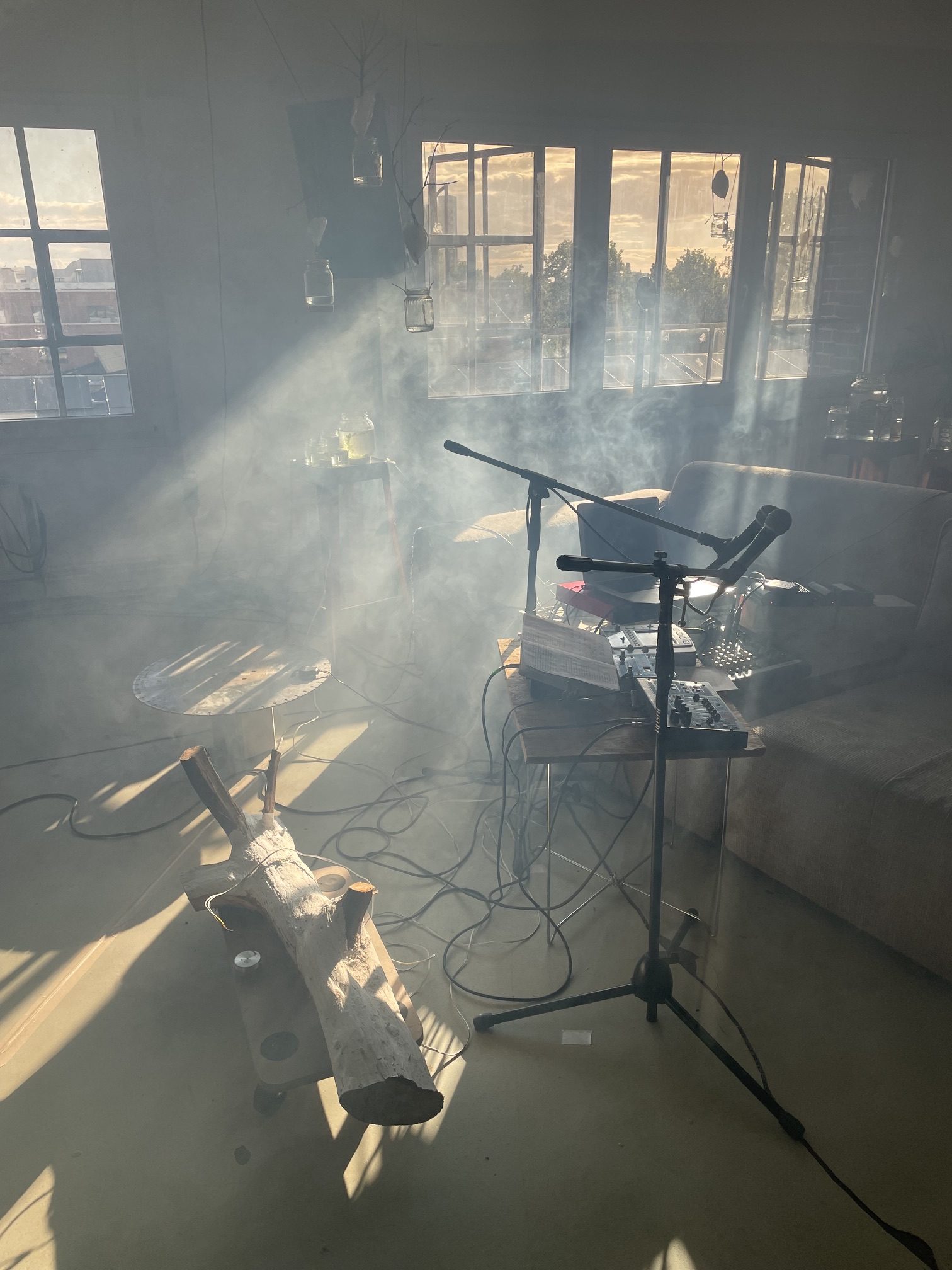
Eiswerder. Sofa Opera, set view, 2026. (Photo: Vladimir Dudchenko).
Saturday, June 13th, was the premiere day for the opera, which could only have been born in these premises (thus, a true residency product by definition). Lisokot (meaning Foxcat in Russian) is the artistic alias of Varya Pavlova, who is based in France. In the Instagram account, she styles herself as a ‘voice artist powered by furry tail’. A singer, composer, poet, and musician, she also records albums, which are available on streaming platforms.
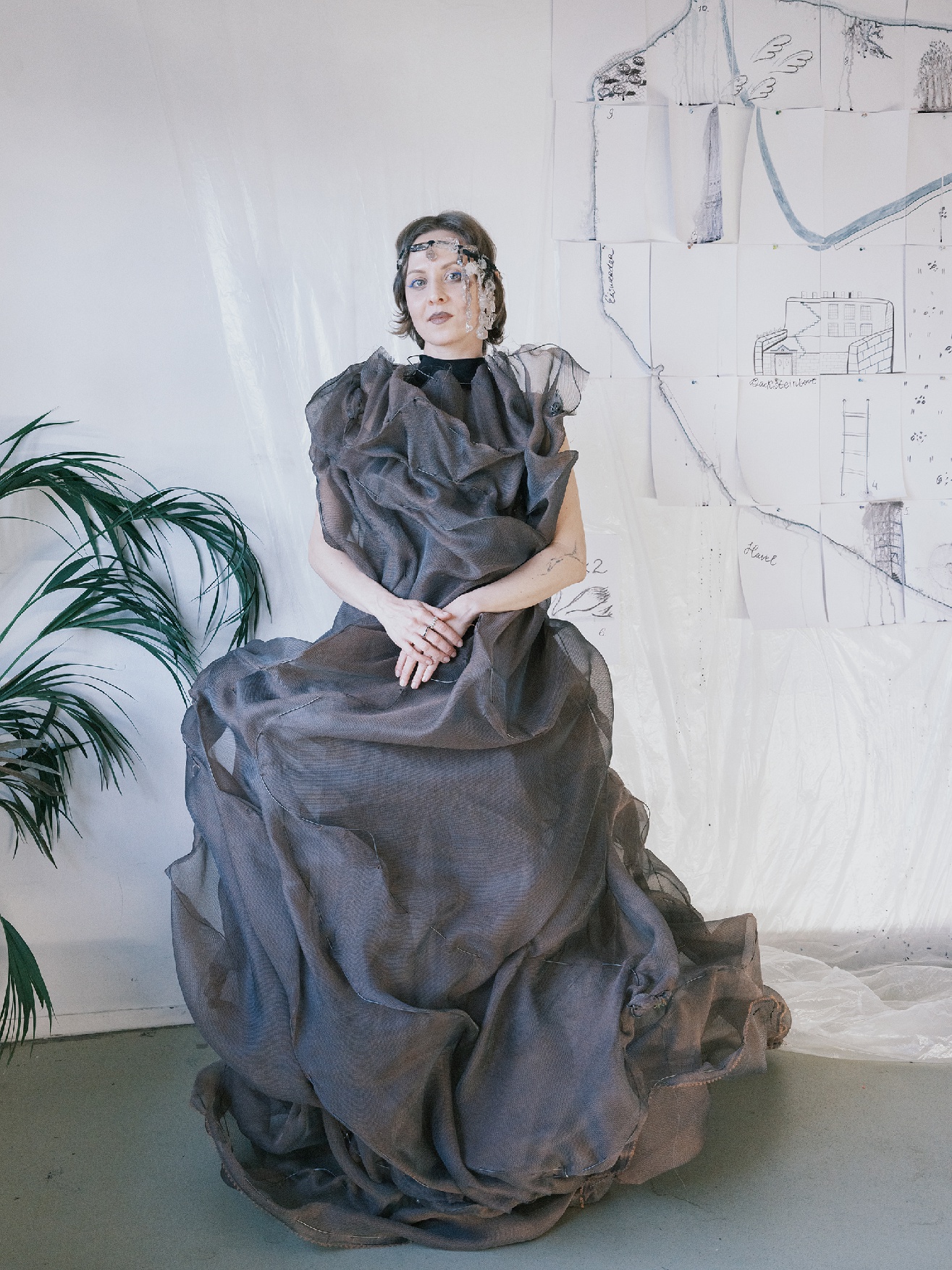
Varya Lisokot at the set of Eiswerder. Sofa Opera, 2026. (Photo: Max Sher).
The genre most typical of Varya Lisokot is the solo musical or sound performance. For such an event, she transforms herself into a particular bird of paradise (or not), depending on the task at hand: the dress and the image are important. Currently, the dress is by Eve Fainke, a member of the local community. Lisokot’s act may be integrated into a specific external context, as was the case a year ago at the exhibition by the MishMash group (Misha Leikin, Masha Sumnina) at XL Projects Berlin. Here, it was more of a composite performance, with MishMash responsible for scenography, stage machinery, sign language interpretation, chorus (in the sense of on-stage commentary in ancient theater), and so on. So Varya was responsible for the operatic, MishMash for the theatrical. And the cluster residents were seamlessly integrated, too, playing multiple parts: both the heroes and the public.
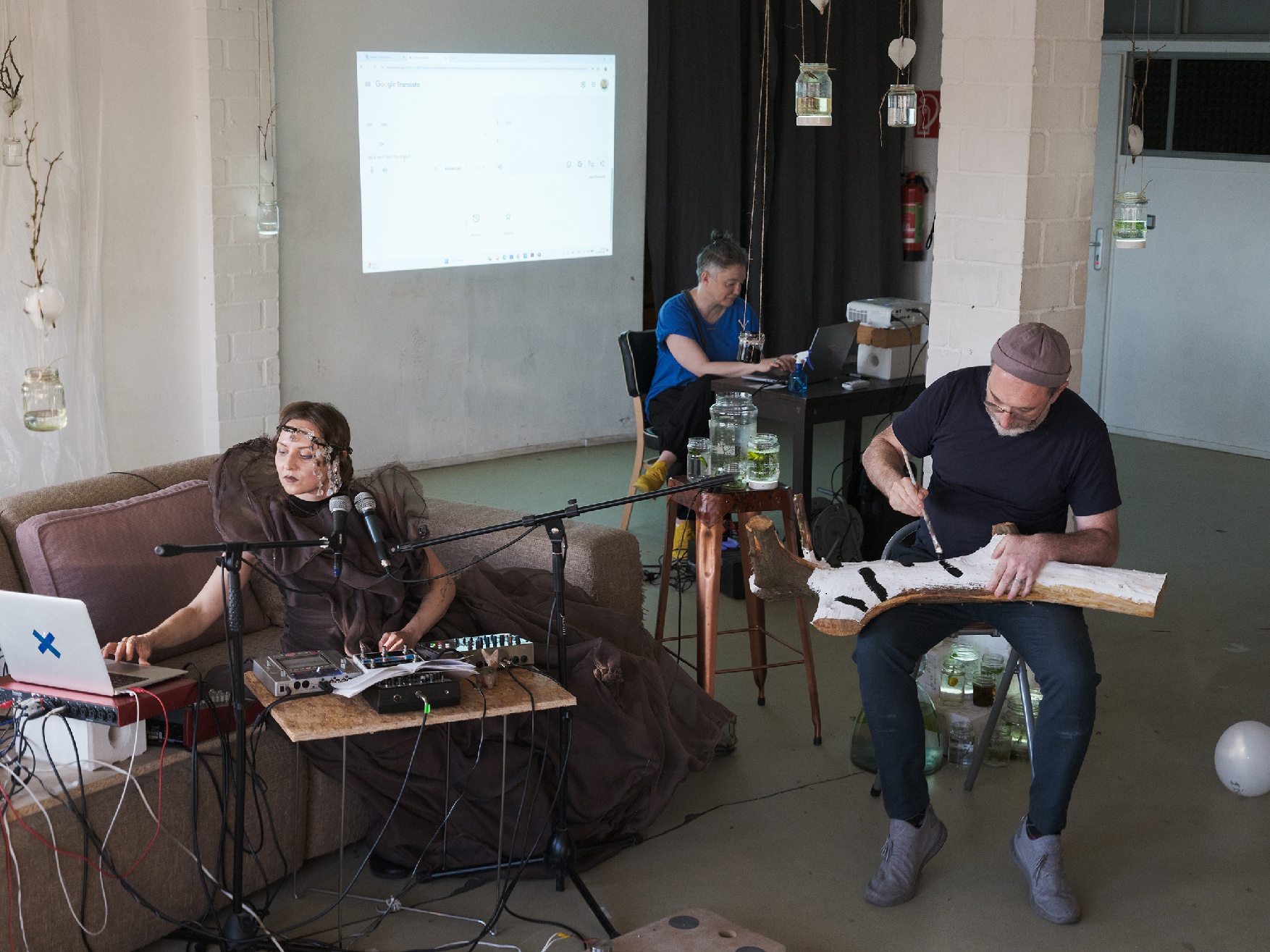
Varya Lisokot and MishMash performing Eiswerder. Sofa Opera, 2026. (Photo: Max Sher).
The overall title is Eiswerder. Sofa Opera, where the local sofa is perceived roughly as the center of the community, the island, the universe.
A dramatic slanting light plays with the artificial smoke that fills the room; tree branches frozen into lumps of ice hang around, slowly thawing and dripping. As people gather, Caspar David Friedrich the cat wanders through the space.

Eiswerder. Sofa Opera, set view, 2026. (Photo: Vladimir Dudchenko).
This opera is a kind of psychogeographical description of this very island of Eiswerder. On the wall hangs a large handmade plan thereof. Masha Sumnina explains it: “…we drew the map and drew out everything that was in and around Backsteinboot: a sofa, jars, water, algae, branches, ice. A false birch.“ So it shows key locations (significant for the authors), and the opera’s individual arias or songs (in the Brecht/Weill sense) correspond to them. A standing mirror captures and focuses a ray of sunlight onto the very spot where all the action takes place: the old factory building. As the performance unfolds, Masha Sumnina sprays water over the drawn locations, eroding or washing them away.
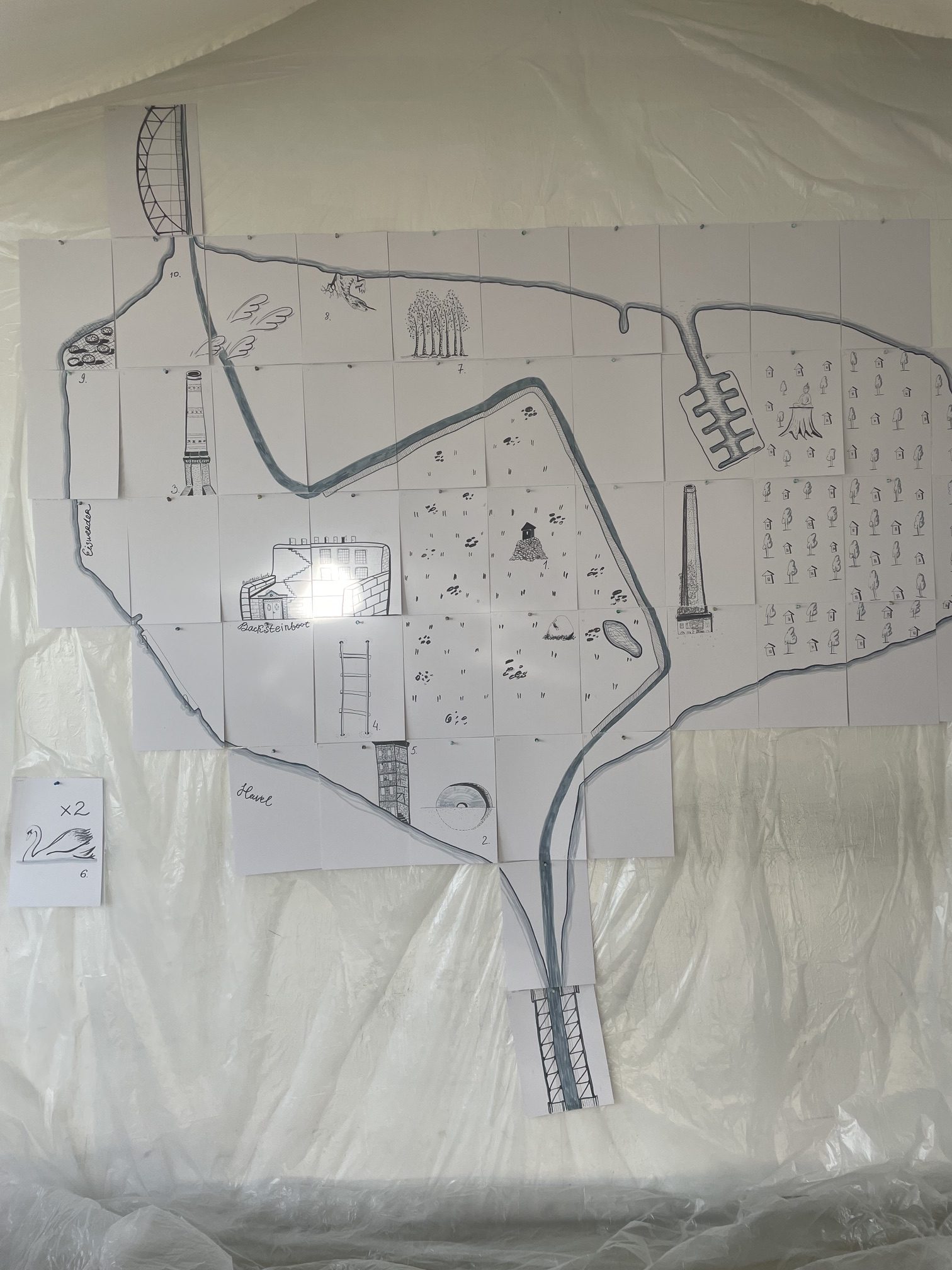
Eiswerder. Sofa Opera, set view, 2026. (Photo: Vladimir Dudchenko).
The name Eisweder can be loosely translated as ‘Ice island’. The landmass was left here by the retreating glacier and was uninhabited for a long time. Then a deaf immigrant from Styria settled here with his kids, the latter fleeing eventually. The immigrant retreated to the center of the wood-covered land, where his cabin had burned to the ground.
Such grim fairytale events, associations, and landmarks of poetic significance are sung or recited, providing a sense of Lisokot’s expressive range: she incorporates and mixes material from everywhere, including the slowed-down version of the pop song “Fox Violin” and witches’ wails and whispers. The German children’s song Drachenkinder (Dragon’s Children) is transformed into a klezmer arrangement (featuring Jan Verwoert, an art critic from the community). The historical echo is unmistakable: this building was, after all, a gunpowder factory.
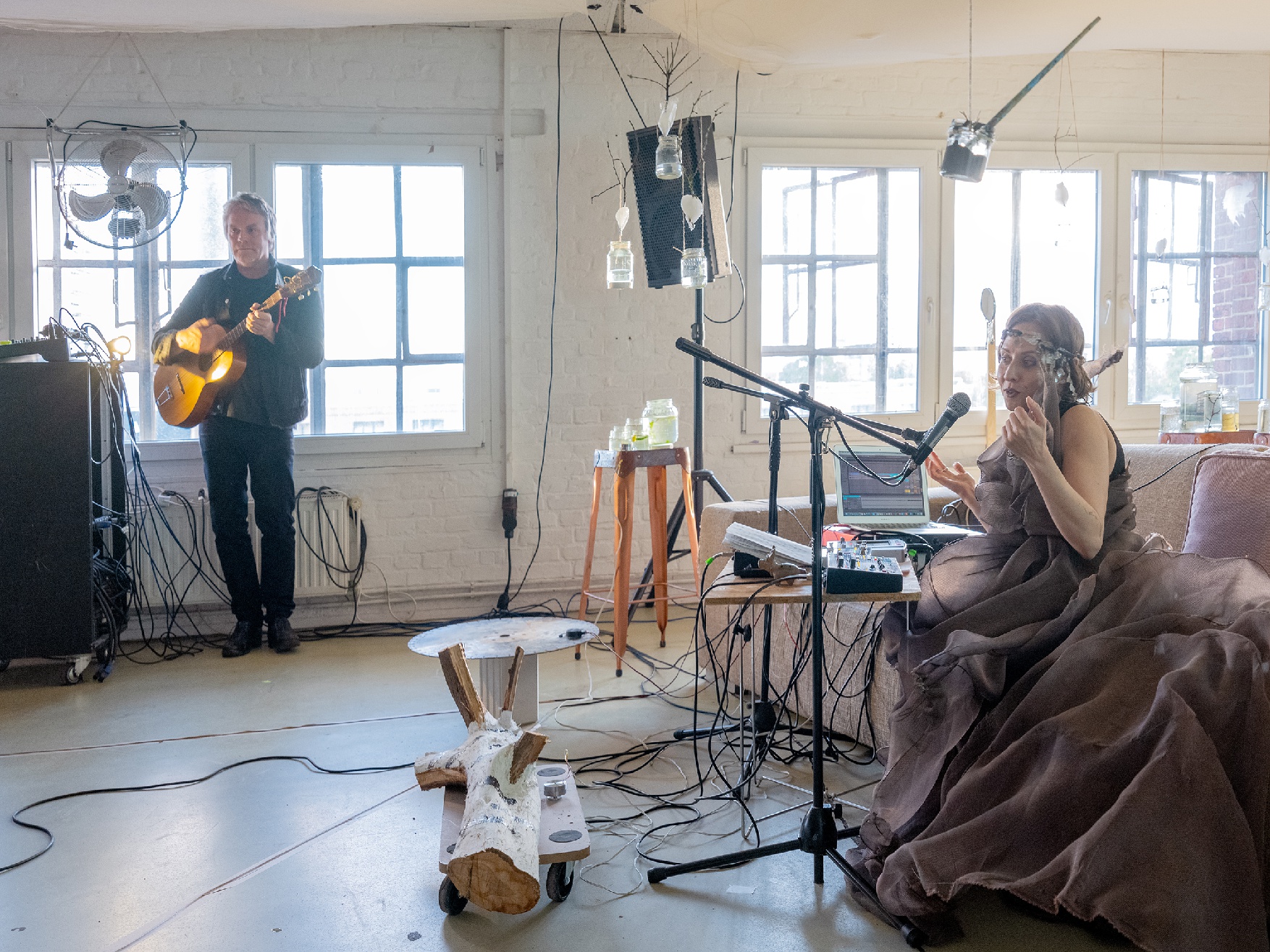
Varya Lisokot and Jan Verwoert performing Eiswerder. Sofa Opera, 2026. (Photo: Max Sher).
Many more residents were involved in the program – for example, the photographer and Backsteinboot’s captain, Inga Ivanova, read one of her poems. And after a dashing pirouette or two, the opera arrives at the post-war cabaret coda piece, with the whole audience singing along.
During the performance, Masha Sumnina was typing live libretto commentaries into a translation program, as her laptop’s screen was projected onto a wall. Meanwhile, Misha Leykin was writing the names of the opera’s acts on white balloons with a black marker pen that made a loud screeching sound and handed them out to the audience.
A Gesamtkunstwerk of an intensity that can only survive outside the busy city center. Still, an opera/theater piece ready for production, with music and sound at its core.
…And as the island outside lay darkening, several birthday and other types of parties started to gain momentum around the place.


0 Comments