
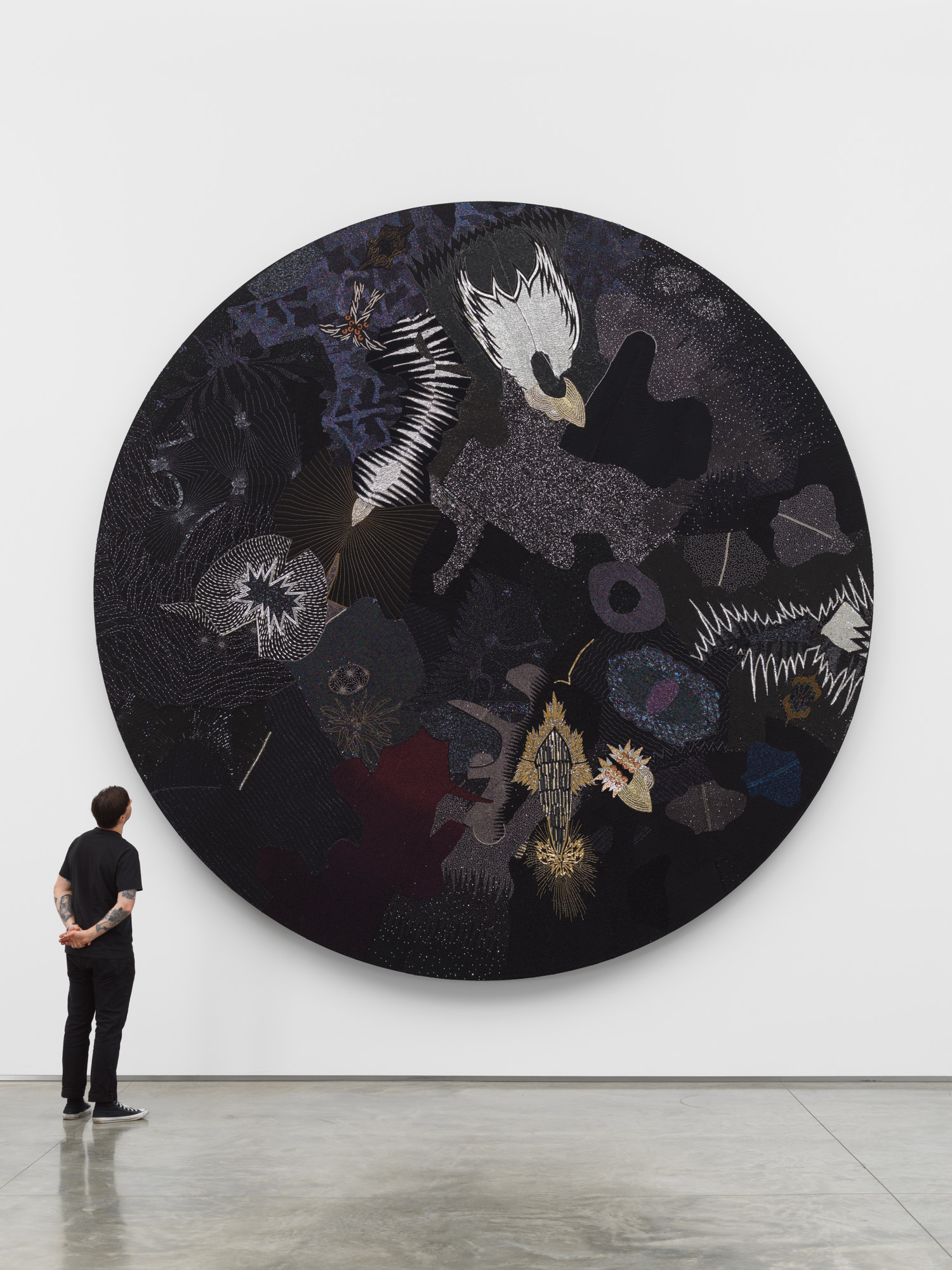
Nick Cave, Constellation, 2006. Mixed media including beaded and sequined garments, fabric, and wood. (Courtesy: the artist and Jack Shainman Gallery, New York)
The press release for “Modus Operandi,” an exhibit at The School—a former high school turned art museum owned by Jack Shainman Gallery in Kinderhook, New York—makes many high-minded claims of exploring ideas like “method not simply as process but as a way of thinking” and how “recurring decisions, materials, and forms of attention…establish a logic of their own.” What that adds up to in practice is a group show, featuring work by nearly 20 artists, that displays a wide variety of materials, styles, and approaches. In other words, it’s a mishmash.
I say this not in the spirit of criticism, but merely as a personal observation. I’ve always embraced variety as a unifying principle, one that reflects the world around us in all its multiplicity. So it matters little to me that the concept of “Modus Operandi” could be seen as just a thin excuse to bring together works by some of the most noteworthy artists of contemporary times. When the works are as consistently stimulating as the ones on display at The School, why carp about excellence?
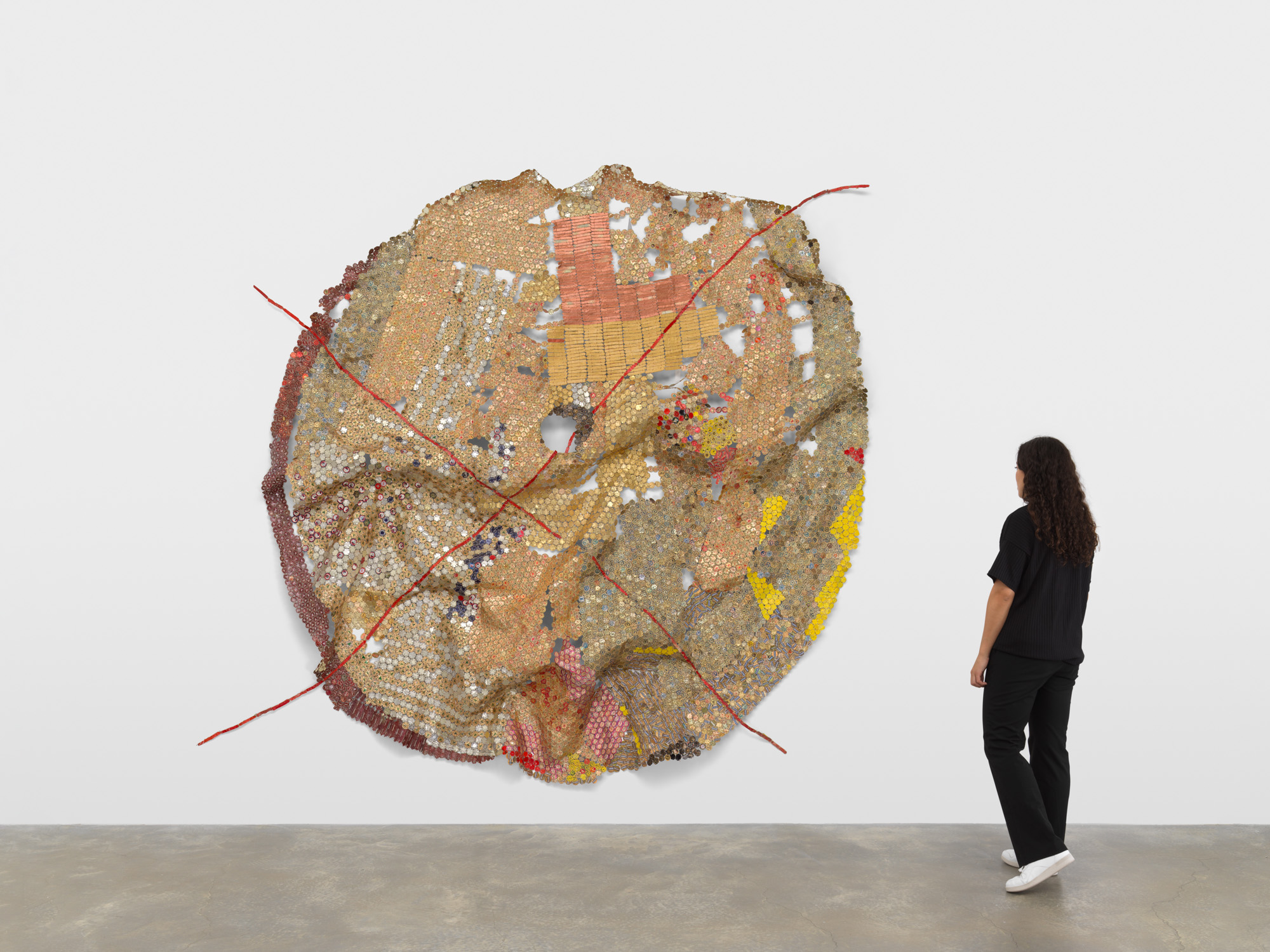
El Anatsui, Silver and Gold Have I Not, 2023. Aluminum and copper wire. (Courtesy: the artist and Jack Shainman Gallery, New York).
Certainly, the sheer diversity of methods is dizzying, with many of the featured artists finding imaginative uses for unexpected materials. In Silver and Gold Have I Not(2023), El Anatsui turns aluminum bottle caps into a richly colorful sculpture, with a big copper-wire “X” crossing the whole thing out. Nick Cave, best known for his wearable fabric “soundsuits” made from found objects, is represented here with a couple of works, including Constellation (2006), a circular fresco in which he shapes beaded and sequined garments, fabric, and wood into formations that collectively add up to something like a new vision of the world. And it’s certainly not every day you see black leather shoes used as part of an artwork the way Jannis Kounellis uses them in Shoes (2006): encasing them in an iron-and-glass case while tying the individual shoes up in wire, with a Jackson Pollock-like drip painting forming a backdrop.
There are, of course, plenty of paintings and drawings throughout “Modus Operandi,” but even those have plenty of twists. To call Alexis Rockman a painter is to sorely undersell the sheer ambition, obsessive detail, and distinctive style of his panoramic canvases. Evolution (1992) and Inherit the Wind (2026) both testify to his fascination with the environment and his worries about climate change. Guillermo Kuitca uses oil and acrylic to reconfigure maps, floor plans, and even luggage carousels in oddly haunting ways. On the more playful side of the spectrum, there’s Bruce Nauman, given a room of his own featuring works ranging from a surreal pencil drawing from his Fingers & Holes series to a colorful lithograph, Clown Taking a Shit, that, representationally speaking, fully lives up to its title.
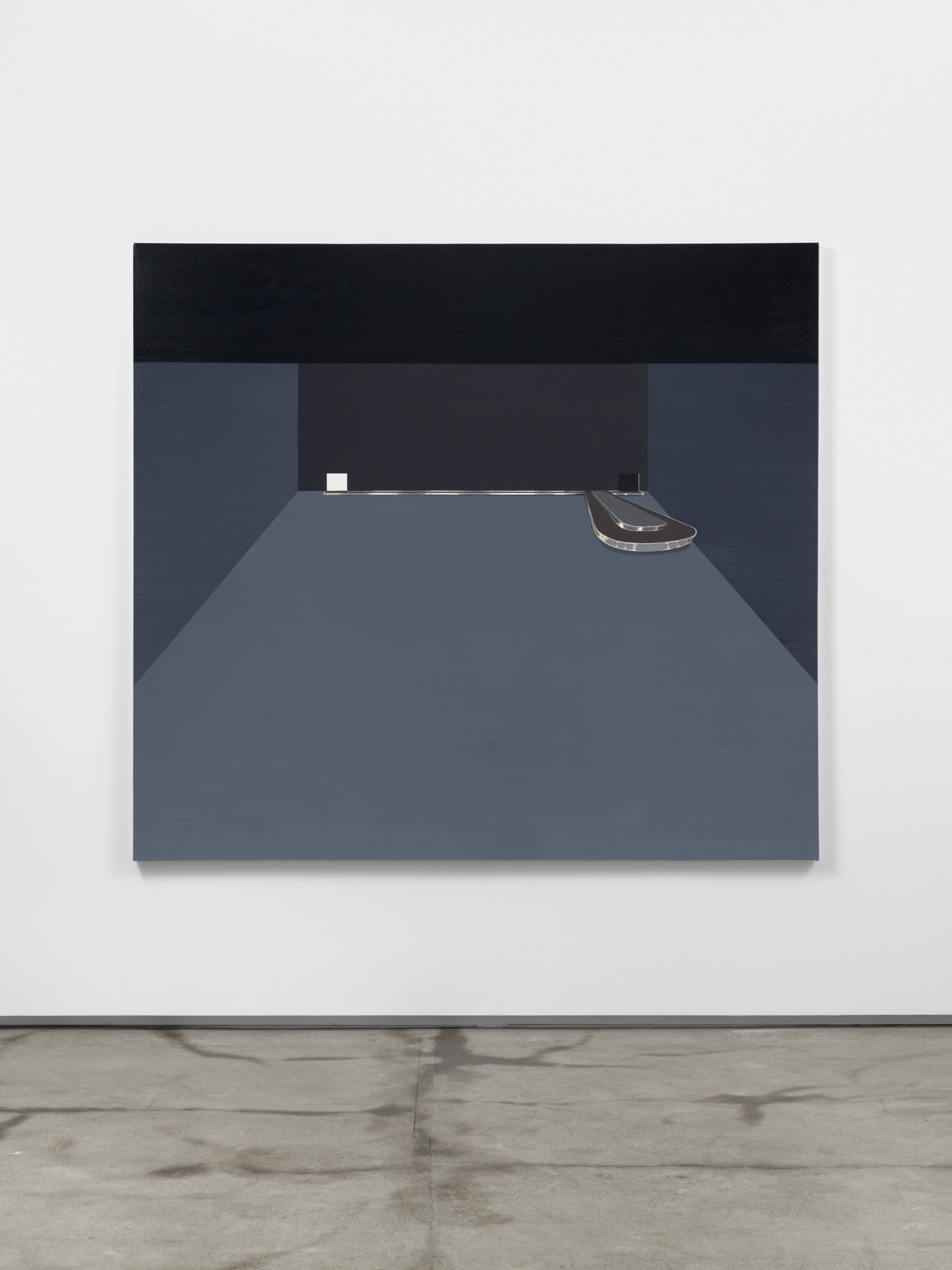
Guillermo Kuitca, Oblivion, 2006. Oil on canvas. (Courtesy: the artist and Jack Shainman Gallery, New York).
Sculptures also abound in this exhibition, many of them offering some of its most exciting discoveries. Rose B. Simpson’s Sentinel in Bronze 1 & A(2023), Cairn: Bronze (2023), and A’gin (2024-25) mix cultural signifiers from various Native American cultures into bold, eye-catching palimpsests. Wolfgang Laib also gets a room of his own in The School, one that includes sculptures made of beeswax, as well as Rice House (2010), featuring a long marble triangle surrounded by multitudes of grains of rice; all the pieces reflect his lifelong interest in working with natural materials. And Mark Dion’s 2014 sculpture The Serpent Before the Fall, which was first seen at the now-shuttered Museum of Biblical Art in New York, presents a speculative, natural history museum-like presentation of the serpent that tempted Eve in the Garden of Eden as a four-legged creature before God cursed it to, as per Genesis 3:14, “crawl on [its] belly and…eat dust all the days of [its] life.”
All of that merely scratches the surface of this diffuse exhibit. The one work that has lingered with me the most in “Modus Operandi” is Windward Coast—West Coast Slave Trade (2009-2018), an installation by Radcliffe Bailey that occupied much of its own room. Amidst a sea of wooden piano keys, arranged in a wave-like formation, black busts of both a human face and a ship pop up. Collectively, it evokes, as hinted at by the work’s title, the Middle Passage sea voyage many African slaves endured to the Americas. And yet, the piano keys themselves offer a counterpoint to the misery and brutality of that trek, suggesting the music that perhaps helped those slaves maintain at least a sliver of their humanity during the most dehumanizing conditions. More than most works in “Modus Operandi,” Bailey’s installation offers its clearest demonstration of the theory that, with some artists, the medium is the message.
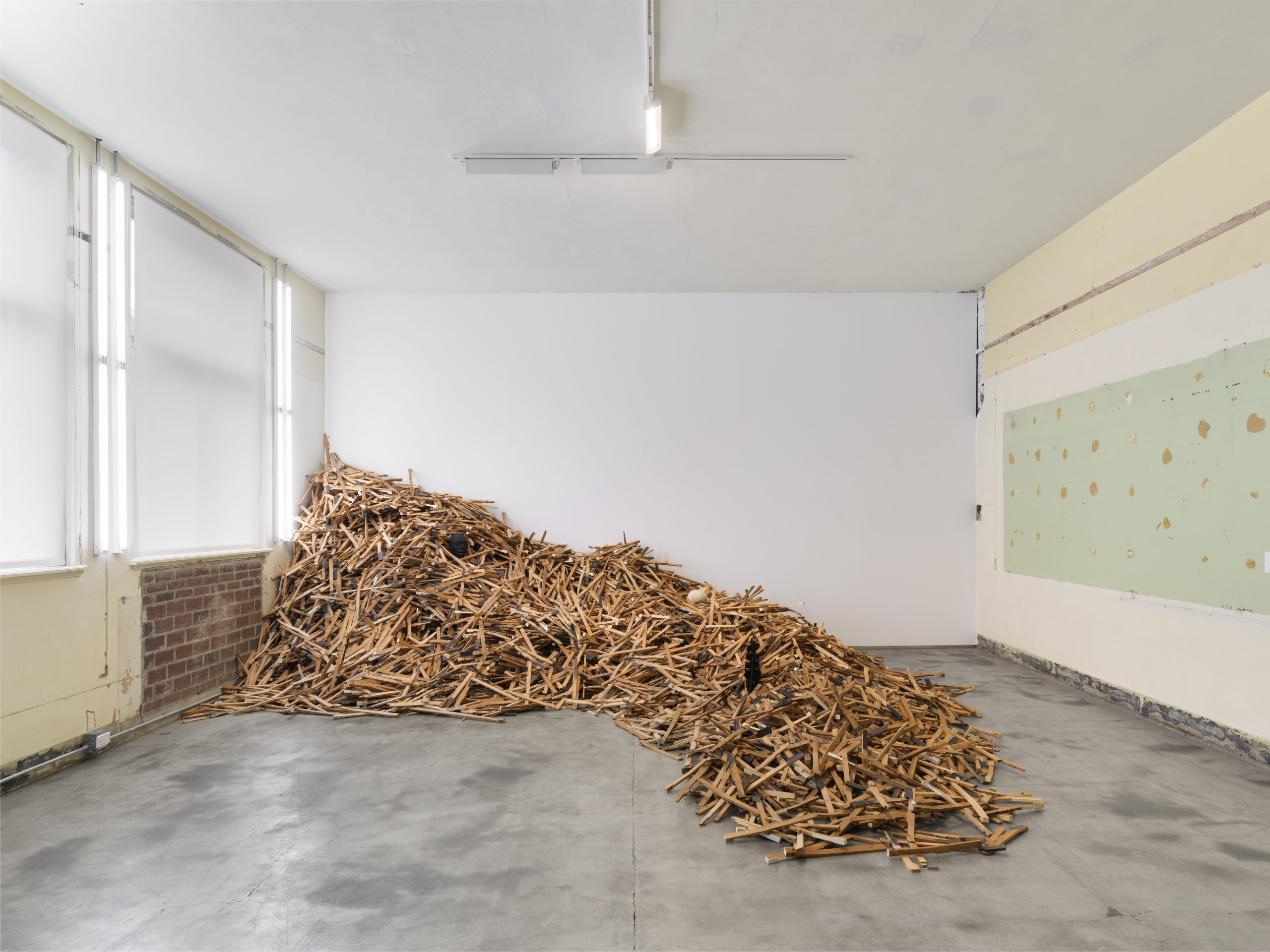
Radcliffe Bailey, Windward Coast—West Coast Slave Trade, 2009-2018. Piano keys, plaster bust, and glitter. (Photo: Dan Bradica Studio).


0 Comments